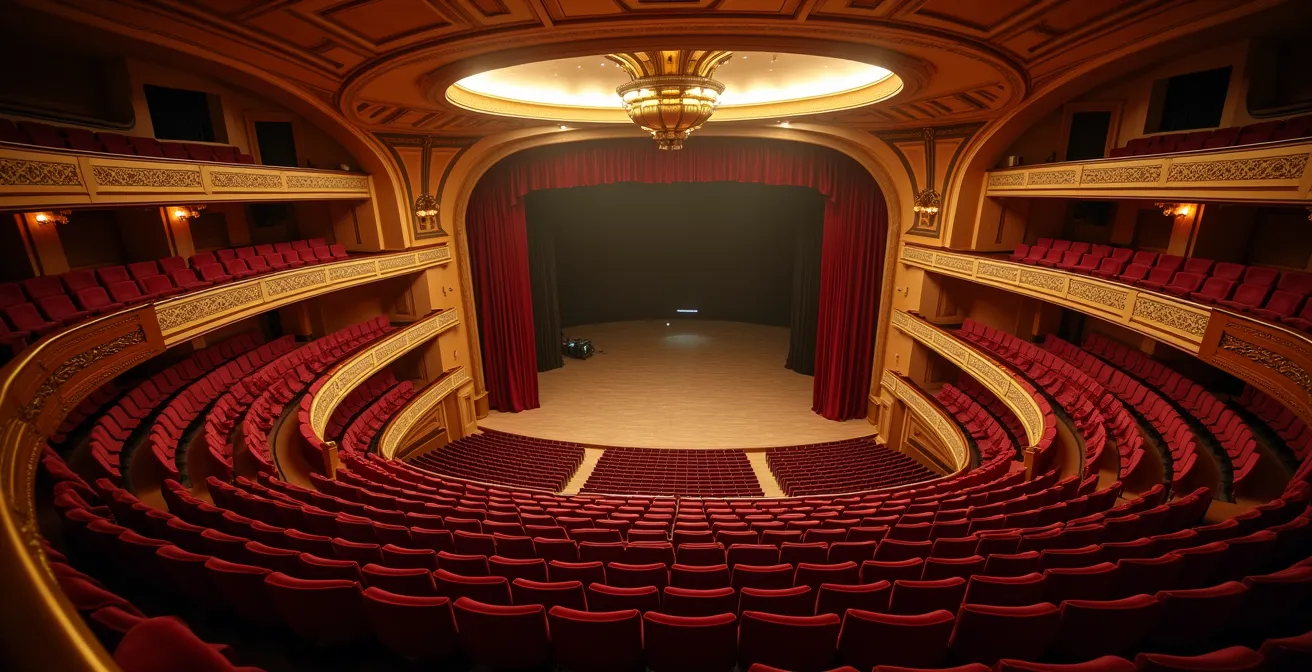
The best seat at the opera isn’t about the view; it’s a calculated acoustic decision based on sound wave physics.
- The central Grand Circle is the definitive acoustic sweet spot for blended concert sound and symphonic richness.
- Strategic parking at Dubai Mall, not the Opera’s own facility, cuts post-show exit times by over 50%.
Recommendation: Define your ‘Opera-Goer Profile’ first—Audiophile, Romantic, or Socialite—to optimize every choice, from seating to scheduling, for a flawless experience.
Selecting a seat for a performance at the Dubai Opera is the first, and most critical, decision in engineering the perfect evening. Most attendees default to a simple logic: closer is better. This often leads them to the premium Stalls, seeking an intimate connection with the performers. From an audio engineering perspective, however, this is a fundamental misunderstanding of how sound behaves in a world-class concert hall. The pursuit should not be for the closest seat, but for the acoustic sweet spot—the precise location where sound waves from the stage and reflections from the hall’s architecture converge to create the most balanced, immersive, and detailed auditory experience.
The architectural design of the Dubai Opera is a marvel of acoustic science. Sound energy radiates from the stage, with higher frequencies traveling in a more direct line and lower frequencies spreading more widely. In the Stalls, you receive a high-impact, direct sound, which is excellent for dramatic performances where facial expressions and raw vocal power are paramount. However, for a full orchestra or a complex musical piece, this directness can lack the richness that comes from the hall’s own contribution to the sound. The real magic happens further back and higher up. In fact, the Grand Circle offers superior blended acoustics for concerts, allowing the listener to perceive the entire soundstage as a cohesive whole, with the added benefit of being significantly more affordable.
This guide abandons the generic “good view” advice. Instead, it provides a technical framework for optimizing your entire visit. We will treat your evening as a system to be perfected, applying an engineering mindset to everything from acoustic selection and dress code to mastering logistical bottlenecks like intermission queues and post-show parking. By understanding the “why” behind each choice, you can move beyond being a mere spectator and become the architect of your own flawless opera experience.
This article will guide you through a series of strategic decisions, transforming your visit from a simple night out into a masterclass in experiential optimization. The following sections break down each component, from arrival logistics to the final curtain call.
Summary: Engineering Your Perfect Dubai Opera Night
- Tuxedo or Jeans: How Strict Is the Opera Dress Code Really?
- Pre-Ordering Drinks: How to Avoid the 20-Minute Queue at Intermission?
- Opera District Parking vs Dubai Mall: Which Exit Is Faster?
- Is the Backstage Tour Worth Doing if You Are Not an Architect?
- What Happens if You Arrive 5 Minutes Late for the Show?
- Is the Dubai Opera Garden Open to Public Without a Ticket?
- When Does the Show Actually Start: Avoiding the 30-Minute Wait in Humidity?
- How to Walk From Metro to Dubai Mall Without Stepping Outside in Summer?
Tuxedo or Jeans: How Strict Is the Opera Dress Code Really?
The question of attire is the first social variable to engineer. While the era of mandatory black-tie is largely gone, the Dubai Opera maintains a standard of elegance. The official stance is clear, as stated by the venue itself. As the Dubai Opera FAQ section clarifies:
Dubai Opera is the ideal venue to celebrate elegance and style. Guests are expected to dress accordingly, avoiding attires that are excessively casual (such as shorts or flip flops) or provocative to maintain the venue’s dress code standards
– Dubai Opera Official, Dubai Opera FAQ Section
This “smart casual to formal” guideline is a deliberate parameter. It excludes beachwear and overly casual items but offers significant flexibility. Think of it not as a strict rule, but as a baseline for respecting the environment. For men, this can mean anything from a button-down shirt and smart trousers to a full suit. For women, cocktail dresses, elegant blouses, or stylish separates are all appropriate. It’s also wise to remember that the auditorium is kept cool for performer and audience comfort, so bringing a light jacket or shawl is a practical consideration. To put it in perspective, the expectation is less rigid than in historic European houses.
This comparative analysis, based on a review of performing arts venues, highlights where Dubai Opera sits on the global scale of formality.
| Opera House | Dress Code Level | Specific Requirements |
|---|---|---|
| Dubai Opera | Smart Casual to Formal | No shorts, flip-flops, or tank tops |
| La Scala Milan | Formal Required | Jacket and tie mandatory for men |
| Vienna State Opera | Strict Formal | Evening wear expected, especially for premieres |
| Royal Opera House London | Flexible Smart | No strict code but formal encouraged |
Ultimately, your choice of attire should align with the type of experience you wish to create. Before you even consider seating, you must first define your objective for the evening.
Action plan: Define your opera-goer profile
- The Romantic: Objective is emotional immersion. Choose Stalls rows CC to B for unparalleled visibility of facial expressions and a powerful, direct sound.
- The Audiophile: Objective is acoustic perfection. Select central Grand Circle rows B to D for the ideal blend of direct and reflected sound, capturing the full orchestral depth.
- The Socialite: Objective is an exclusive experience. Book a VIP Box for privacy and service, accepting that side views may offer a slightly compromised acoustic and visual angle.
- The Value Seeker: Objective is the best price-to-experience ratio. Pick Royal Circle rows D-E, middle seats, which offer a balanced and affordable option.
Pre-Ordering Drinks: How to Avoid the 20-Minute Queue at Intermission?
The 20-minute intermission is a critical component of the opera experience, but it often creates a significant logistical bottleneck at the main bar. The sudden rush of hundreds of patrons creates long queues, consuming valuable time that could be spent relaxing or discussing the performance. Applying an engineering mindset means bypassing this bottleneck entirely through strategic planning. The most effective method is to remove yourself from the queueing system before it even forms.

The key is pre-ordering. This can be done via the Dubai Opera app before you even arrive or at any bar counter before the show begins. It is a simple step that transforms your intermission from a frantic wait into a seamless transition. While others are queueing, your refreshments will be waiting for you at a designated collection point. Furthermore, note that food and beverages are generally not permitted inside the main auditorium; they are meant to be enjoyed in the lobby areas before the show or during the interval, which is typically scheduled for longer performances of two hours or more.
For maximum efficiency, follow a precise strategy to beat the rush and reclaim your intermission.
- Pre-order Online: Use the official app to order drinks for both pre-show and intermission at the same time.
- Locate Satellite Bars: The main lobby bar is the most congested. There are often smaller, less-crowded bars on the upper levels. Identify these upon arrival.
- Time Your Exit: Do not wait for the house lights to come up fully. As soon as the performance pauses and the lights begin to change, make your move. This can give you a 30-second head start.
- Consider the Alternative: If refreshments aren’t a priority, skip the bar entirely. Use the time to step out into the Dubai Opera Garden for fresh air and stunning views of the Burj Khalifa.
Opera District Parking vs Dubai Mall: Which Exit Is Faster?
The final act of your evening shouldn’t be a 30-minute battle to exit a car park. The choice of parking is a crucial logistical decision that directly impacts your post-show experience. While the underground parking at the Opera District seems like the most convenient option, it becomes a severe logistical bottleneck after a major performance. With a full house, the average exit time can be up to 30 minutes as hundreds of vehicles attempt to leave simultaneously through limited exits.
A more strategic approach involves a trade-off: a slightly longer walk for a significantly faster escape. Parking at the nearby Dubai Mall, specifically at the Cinema or Grand Parking areas, offers a more efficient solution. The 8-12 minute walk is mostly through air-conditioned bridges and walkways, a negligible factor compared to the time saved on exiting. The mall’s vast parking infrastructure is designed to handle a much larger volume of traffic, allowing for a quicker dispersal.
This decision can be broken down into a simple data-driven comparison. Based on a thorough analysis of parking options, the optimal choice becomes clear when weighing time against convenience.
| Parking Location | Walking Time | Cost (AED) | Exit Speed Post-Show |
|---|---|---|---|
| Opera District Parking | 2-3 minutes | 40 | Slow (25-30 min) |
| Dubai Mall Cinema Parking | 8-10 minutes | 20-30 | Fast (10-15 min) |
| Dubai Mall Grand Parking | 10-12 minutes | 20-30 | Moderate (15-20 min) |
| Valet Service | 0 minutes | 100+ | Variable (15-25 min) |
The data indicates that for a swift departure, Dubai Mall Cinema Parking is the superior engineering choice. The minimal extra walking time is a small price to pay for reclaiming 15-20 minutes of your evening from traffic congestion.
Is the Backstage Tour Worth Doing if You Are Not an Architect?
While the dhow-shaped architecture of the Dubai Opera is a visual masterpiece, the value of its backstage tour extends far beyond architectural appreciation. For the true music lover or theatre enthusiast, the tour offers a rare glimpse into the complex machinery that brings a performance to life. It is an exploration of the venue’s technical soul, revealing the hidden systems and spaces that are integral to the magic on stage. This is not just a tour for architects; it’s for anyone who wants to understand the “how” behind the spectacle.
The experience is designed to be intimate and revealing. The Dubai Opera Grand Tour takes you through the very heart of the production house. You walk through the same corridors as the world’s greatest performers, see the dressing rooms with their brightly lit mirrors, and discover the secrets of the orchestra pit and the complex “trap room” system beneath the stage. One of the most fascinating aspects is witnessing the massive, rarely-seen storage area where rows of seats are hydraulically stowed to transform the venue from a proscenium arch theatre into a concert hall or a flat floor for a banquet.
The value lies in this deconstruction of the theatrical illusion. By seeing the mechanics, your appreciation for the seamless execution of a live performance deepens. According to Dubai Opera’s own materials, the tour provides a rare glimpse into the normally hidden backstage areas of this iconic venue, with limited slots ensuring an intimate and personalized experience. It demystifies the process and connects you more deeply to the art form itself.
What Happens if You Arrive 5 Minutes Late for the Show?
Arriving even a few minutes late to a performance at Dubai Opera means you will not be seated immediately. The venue operates a strict latecomer policy to preserve the integrity of the performance and avoid disturbing other patrons. Latecomers are typically asked to wait in the main lobby, where they can watch the show on monitors until a suitable break in the performance allows for entry. This policy is standard across most major international opera houses.
The length of this “lockout period” is not fixed; it varies significantly depending on the nature of the show. For a symphony performance, a suitable break might occur after the first movement, often just 5-10 minutes into the show. However, for a narrative opera or a ballet, you may be required to wait until the end of the first act, which could be a lockout of 25 minutes or more. Some venues may offer temporary “sympathy seats” at the back of the auditorium, allowing late patrons to enter and then move to their actual seats during a major interval, but this is not guaranteed.
Therefore, temporal precision is not just a convenience—it’s a necessity. To avoid this scenario, it’s critical to understand the venue’s timing. A tour guide for the venue highlights a crucial point often missed by first-timers:
Doors to the auditorium open 30 minutes prior to beginning of the performance. Mobile display of your ticket is not allowed so ensure you print your ticket beforehand
– Dubai Opera Tour Guide, A First Timer’s Guide To Dubai Opera House
This underscores two key actions: arrive well within the 30-minute window before the ticketed start time, and have your printed ticket ready. Relying on a mobile display is not an option and will only add delays.
Is the Dubai Opera Garden Open to Public Without a Ticket?
Yes, the Dubai Opera Garden is completely open to the public and does not require a performance ticket for access. This beautifully landscaped plaza serves as a public space, offering one of the most spectacular vantage points in Downtown Dubai. It’s an integral part of the venue’s design, intended to be a communal area where art and city life intersect. From the garden, you can admire the stunning dhow-inspired architecture of the opera house and enjoy unparalleled views of the Burj Khalifa and the Dubai Fountain.
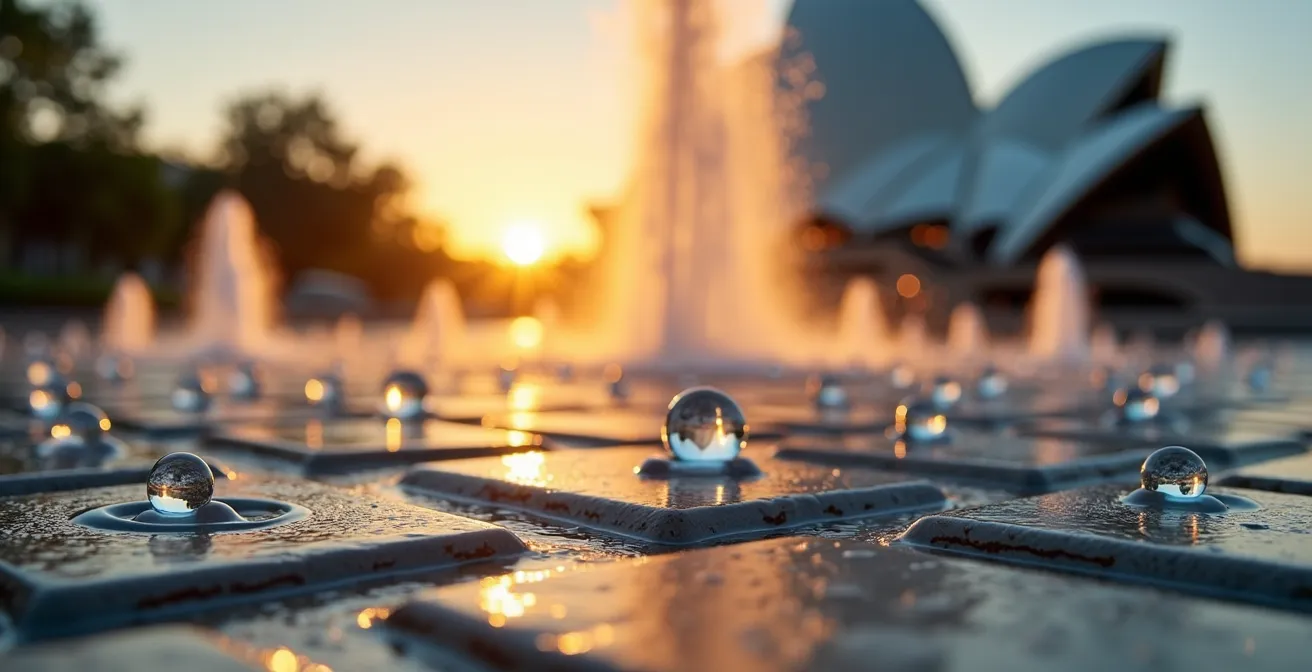
According to a visitor’s guide to the venue, the garden is a free-to-access area that allows the public to engage with the landmark even without attending a show. This makes it a destination in its own right. It’s an ideal spot for a pre-show stroll, a quiet moment during intermission, or simply a place to enjoy the ambiance of the district on any given evening. The space features elegant water features and sculptures, creating a tranquil atmosphere amidst the city’s hustle.
For ticket holders, the garden provides a wonderful alternative to the crowded indoor lobbies during the interval. It offers a chance to get some fresh air and enjoy a different perspective of the iconic surroundings. For the general public, it’s a perfect, cost-free way to experience a piece of the Dubai Opera’s grandeur and capture some truly memorable photographs, especially during the golden hour at sunset.
When Does the Show Actually Start: Avoiding the 30-Minute Wait in Humidity?
One of the most common logistical errors is misinterpreting the start time printed on the ticket. At Dubai Opera, the time shown is the exact moment the curtain rises or the performance begins—it is not an arrival guideline. The venue employs a traditional and highly precise bell system to signal key timings to patrons, a system designed to ensure a prompt start and minimize disruption. Understanding this system is the key to achieving temporal precision and avoiding unnecessary waiting, especially in Dubai’s outdoor humidity during warmer months.
The system is straightforward: the auditorium doors open exactly 30 minutes before the performance. The first bell rings 15 minutes prior to the start, signaling that it’s time to begin making your way to your seat. The second and final bell rings 5 minutes before, indicating the last call to be seated. Adhering to this timeline means you spend the minimum amount of time exposed to the elements and the maximum amount in the climate-controlled comfort of the opera house. Also, remember that photography and videography are strictly prohibited during the performance to respect the artists and fellow audience members.
To perfectly engineer your arrival, you can follow a “just-in-time” timeline that accounts for security checks, ticket scanning, and finding your seat without stress.
Your Just-in-Time Arrival Timeline
- T-minus 25 minutes: Arrive at the venue entrance. This allocates a brief buffer for any outdoor transit from a taxi or parking.
- T-minus 20 minutes: Clear the security check and enter the air-conditioned main lobby.
- T-minus 15 minutes: The first bell rings. Use this cue to locate your specific auditorium entrance door (e.g., Stalls Door 3).
- T-minus 10 minutes: Find your seat section, row, and number.
- T-minus 5 minutes: The second bell rings. This is your window for a final visit to the restroom.
- T-minus 2 minutes: Be settled in your seat with your phone silenced, ready for the performance to begin.
Key Takeaways
- Optimize for the acoustic sweet spot (central Grand Circle for concerts), not just the closest view.
- Treat logistical challenges like parking and queues as engineering problems to be solved with data and strategic timing.
- Master temporal precision by understanding the bell system and following a just-in-time arrival schedule for a stress-free experience.
How to Walk From Metro to Dubai Mall Without Stepping Outside in Summer?
The “first mile” of your journey to the Dubai Opera can be the most challenging, especially during the summer months. The walk from the metro station to the venue involves navigating a significant distance, and minimizing exposure to the heat is a top logistical priority. The solution lies in using the fully air-conditioned infrastructure connecting the metro to The Dubai Mall, creating a climate-controlled thermal pathway for almost the entire journey.
While there is no direct indoor path to the Opera House itself, you can cover over 95% of the distance from the metro in air-conditioned comfort. The final leg is a short, 2-3 minute walk across the plaza, but the main stretch is entirely indoors. This route requires navigating through The Dubai Mall, but following a specific path avoids the most crowded areas and leads you efficiently toward your destination. The key is to follow signs for “Souk Al Bahar” once inside the mall, as this is the exit point that leads directly to the bridge crossing over the Dubai Fountain to the Opera district.
Following this precise, step-by-step route transforms a potentially uncomfortable journey into a seamless, climate-controlled walk.
- Step 1: Exit at the Burj Khalifa/Dubai Mall Metro Station on the Red Line.
- Step 2: Follow the signs to the “Metro Link Bridge.” This is a long, fully enclosed, and air-conditioned walkway.
- Step 3: Continue on the travelators along the approximately 820-meter bridge.
- Step 4: You will enter The Dubai Mall on the Lower Ground (LG) level, near the Aquarium entrance.
- Step 5: After the travelators end, turn left at the first main corridor. Critically, avoid the signs for Fashion Avenue.
- Step 6: Follow the overhead signs for “Souk Al Bahar / Dubai Opera” which will guide you through the mall.
- Step 7: Exit the mall via the Souk Al Bahar bridge, which is a covered walkway over the water.
- Step 8: The final 500 meters involve crossing the fountain plaza to the Dubai Opera. This is the only outdoor portion of the route.
By applying this engineering mindset—from choosing your seat for its acoustic properties to planning your route for thermal efficiency—you transform a standard night out into a perfectly calibrated and deeply rewarding experience. Your next visit to the Dubai Opera can now be approached not with hope, but with a precise and effective strategy.