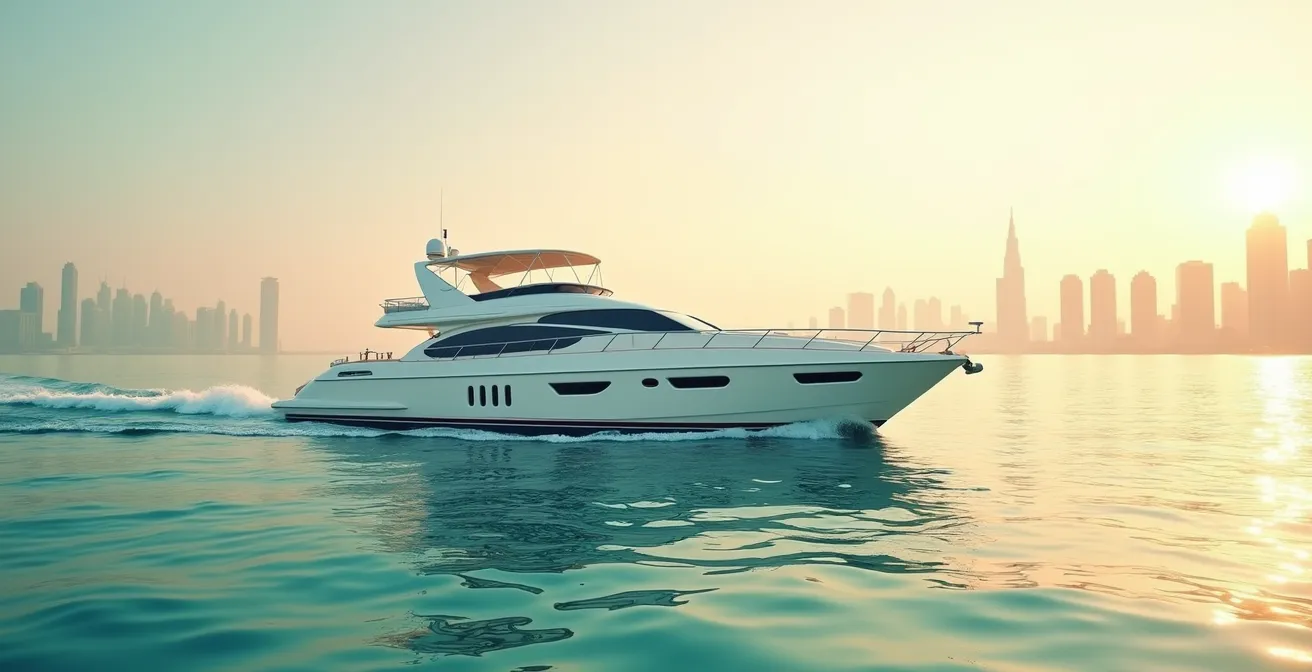
Securing a luxury yacht charter in Dubai without surprise fees requires a shift from a consumer mindset to a project manager’s focus on contractual clarity.
- ‘Max Capacity’ is a legal metric, not a comfort one; always derate by 25-50% for events to ensure service quality and guest comfort.
- Hidden costs extend beyond the yacht; insurance voids on analogous rentals like cars or jet skis prove all contract clauses are strictly enforced in Dubai.
Recommendation: Adopt a pre-charter documentation protocol for all rented assets, using 4K video to create an un-disputable record of condition before your event begins.
Organizing an event on a luxury yacht in Dubai is the pinnacle of sophistication—a seamless blend of stunning skylines, turquoise waters, and unparalleled service. But for a party organizer, the dream can quickly sour with the presentation of a final bill inflated by unforeseen charges. The fear of “bill shock,” especially from ambiguous items like “deep cleaning fees,” is a significant professional risk. While common advice suggests you “read the contract,” this is often insufficient.
Most guides focus on comparing brochure prices, but they fail to address the operational realities and contractual nuances that truly dictate the final cost. As a maritime charter broker, my role is to protect my clients by focusing on contractual clarity and risk mitigation. This guide is not a list of simple tips; it is a professional briefing designed to arm you with the contractual mindset needed to navigate the Dubai charter market. We will deconstruct the process, moving beyond superficial costs to examine the clauses and conditions that truly matter.
From the real-world implications of guest capacity and catering choices to the critical lessons learned from other luxury rental sectors in Dubai, this framework will provide you with the tools to ensure your event is a flawless success, both on the water and on the final invoice. We will cover the key operational decisions and contractual pressure points you must manage to secure a charter with total cost transparency.
Summary: Deconstructing the True Cost of a Dubai Yacht Charter
- Bring Your Own Food vs Yacht Catering: Which Saves More Money?
- Route Planning: How to Avoid Choppy Waters Near the Palm Outer Crescent?
- Why ’20-Person Capacity’ Actually Means 15 for Comfort?
- Morning vs Sunset Charter: When Is the Water Color Most Vibrant?
- Swimming Off the Yacht: What Are the Jellyfish Risks in October?
- The ‘Off-Road’ Clause: Why Your Luxury Rental Insurance Void on Sand?
- The Scratch Scam: How to Document the Jet Ski Condition Before Riding?
- Nikki Beach or Drift: Which Club Justifies the $100 Entry Fee?
Bring Your Own Food vs Yacht Catering: Which Saves More Money?
The decision between bringing your own provisions (BYO) and opting for the yacht’s catering service is one of the first major cost forks in the road for any event organizer. On the surface, BYO seems like the obvious path to savings. However, the calculation is more complex than a simple comparison of grocery bills to a catering quote. The true cost must factor in service, logistics, and potential ancillary fees that can erode initial savings.
Charter companies in Dubai often present catering packages as an all-inclusive solution. However, even basic packages can represent a significant markup. For instance, basic catering can cost between AED 50-100 ($14-$27) per person, a figure that can quickly escalate for more elaborate menus. The critical factor is understanding what this price includes. Is it for live cooking by a chef, or pre-prepared meals delivered to the boat? Does it include service staff, or will the yacht’s deckhand be doubling as a waiter?
To achieve contractual clarity, you must ask precise operational questions. Vague assurances are unacceptable. Before signing, demand concrete answers to the following, and get them in writing:
- Is the catering based on live cooking on board or pre-prepared meals? This impacts food quality and the guest experience.
- What is the specific crew-to-guest ratio for service staff? This determines the level of attentiveness your guests will receive.
- Can you provide actual photos of catering setups from this specific yacht, not generic stock images? This verifies the quality of presentation.
- Are there corkage fees for bringing our own beverages, even if we use your food catering?
- What specific cleanup services are included in the charter price versus the catering price, to avoid surprise post-event cleaning fees?
Ultimately, while BYO may save money on paper for a small, informal gathering, full-service catering often provides better value and lower risk for a professionally organized event, provided you have contractually secured the service level you expect.
Route Planning: How to Avoid Choppy Waters Near the Palm Outer Crescent?
For a party organizer, the yacht’s route is not merely a path on a map; it is a critical component of the guest experience. A route through choppy waters can ruin an otherwise perfect event, leading to discomfort and seasickness. While Dubai’s waters are generally calm, areas like the outer crescent of Palm Jumeirah are more exposed and can become turbulent, particularly in the afternoon when wind and boat traffic increase. The key to a smooth journey is proactive planning and deference to captain’s expertise.
Experienced captains in Dubai have developed optimal routing strategies based on time of day and prevailing conditions. For instance, a morning departure between 9 AM and noon is highly recommended for charters heading towards the Palm, as it avoids the afternoon surge in both traffic and wind. For first-time charterers or events where guest comfort is the absolute priority, the route from Dubai Marina along the Jumeirah Beach Residence (JBR) coastline is consistently the smoothest and offers iconic views without exposure to open sea conditions. More ambitious routes, such as to The World Islands, require a mandatory wind and sea state check 48 hours prior to departure.
Your responsibility as an organizer is not to dictate the route but to clearly communicate your event’s priorities to the captain. State whether the goal is sightseeing, a stable platform for dining, or reaching a specific swimming spot. This allows the captain to use their expertise to plan the best possible route that balances your desires with the reality of the marine environment.
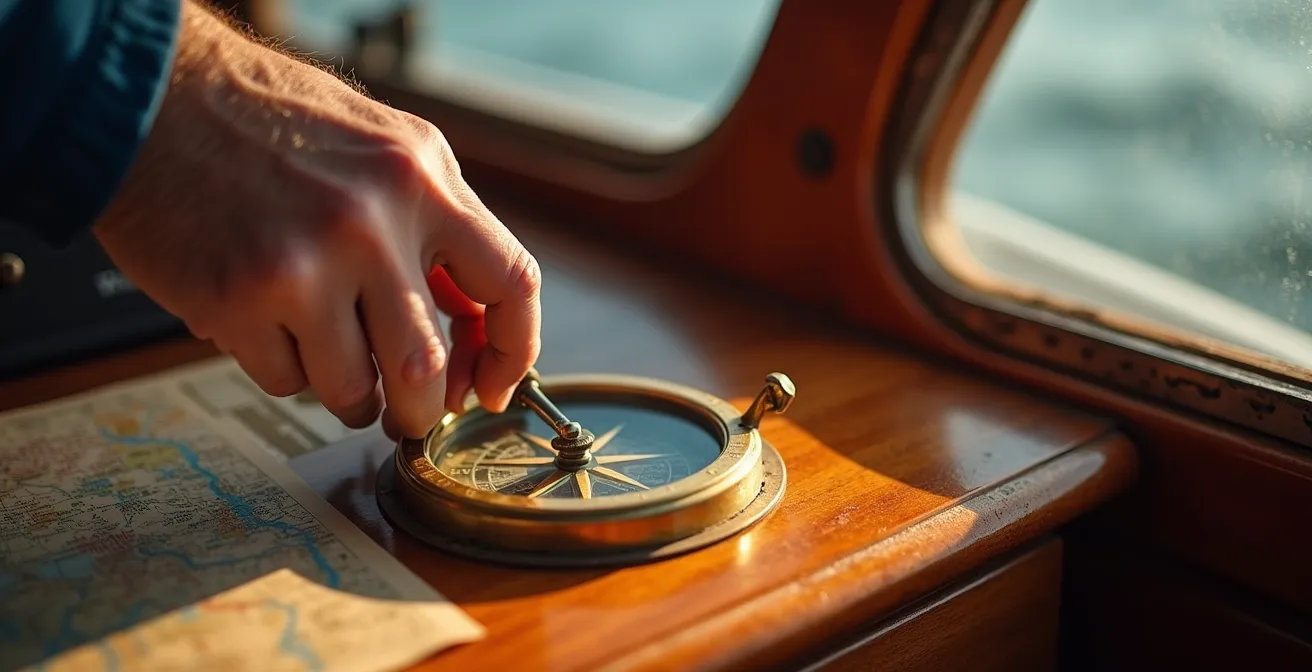
The captain’s control panel is more than just equipment; it represents a wealth of localized knowledge. Trusting their judgment on route adjustments is not an abdication of control but a strategic decision to ensure the safety and comfort of your guests. A good charter agreement will grant the captain final authority on the route for safety reasons—a clause you should view as a feature, not a restriction.
Why ’20-Person Capacity’ Actually Means 15 for Comfort?
One of the most common and costly mistakes an event organizer can make is confusing a yacht’s legal capacity with its operational comfort capacity. When a yacht is advertised with a “20-person capacity,” this number typically refers to the maximum number of individuals legally permitted on board by the UAE Coast Guard, based on life-saving equipment. It is a safety metric, not a measure of guest experience. Hosting a high-end party or a seated dinner for the legal maximum number of guests is a recipe for disaster.
A successful event requires space for guests to move, mingle, and be served. Staff (waiters, a DJ, your own event team) also count towards the legal capacity, further reducing the number of guests you can invite. As a professional charter broker, my standing advice is to apply a derating factor. For a standing cocktail party, plan for no more than 75% of the legal capacity. For a seated dining event, this number often drops to 50% or less, depending on the yacht’s layout. A yacht that can legally hold 20 people might only comfortably seat 10 for dinner.
Ignoring this distinction leads to overcrowding, strained facilities, and a service level that cannot meet expectations—all of which reflect poorly on you as the organizer. Before booking, you must inquire about the “comfort capacity” for your specific event type. The following table provides a general guideline for translating advertised capacity into realistic event numbers, based on data from Dubai’s charter market.
| Yacht Size | Legal Capacity | Comfortable for Standing Party | Comfortable for Seated Dining |
|---|---|---|---|
| 45-50ft | 12 guests | 9 guests | 6 guests |
| 55-65ft | 20 guests | 15 guests | 10 guests |
| 75-85ft | 30 guests | 22 guests | 15 guests |
| 100ft+ | 40+ guests | 30 guests | 20 guests |
Using this framework ensures that your event feels spacious and luxurious, rather than cramped and compromised. It is a critical step in aligning the charter asset with the event’s objectives and avoiding a negative guest experience.
Morning vs Sunset Charter: When Is the Water Color Most Vibrant?
The timing of your charter has a profound impact on the visual experience, particularly the perceived color of the water. As an event organizer, choosing the right time slot is about curating the atmosphere and backdrop for photos and guest enjoyment. The question of “most vibrant” water color in Dubai depends on your definition of vibrancy: the brilliant turquoise transparency or the fiery reflections of sunset?
For the most stunning, crystal-clear turquoise color, a midday charter (approximately 11 AM to 3 PM) is unbeatable. During these hours, the sun is at its highest point, allowing its rays to penetrate deepest into the water. This direct overhead light illuminates the sandy seabed in shallower areas around the coast, creating the iconic, Maldives-like transparent blue and green hues that look spectacular in photos. This is the ideal time for swimming and activities centered around the beauty of the water itself.
A morning charter (from 9 AM) offers clear, crisp light and often calmer seas, but the lower angle of the sun means the water will appear a deeper, more royal blue rather than a bright turquoise. It’s a serene and beautiful experience, but less focused on water transparency.
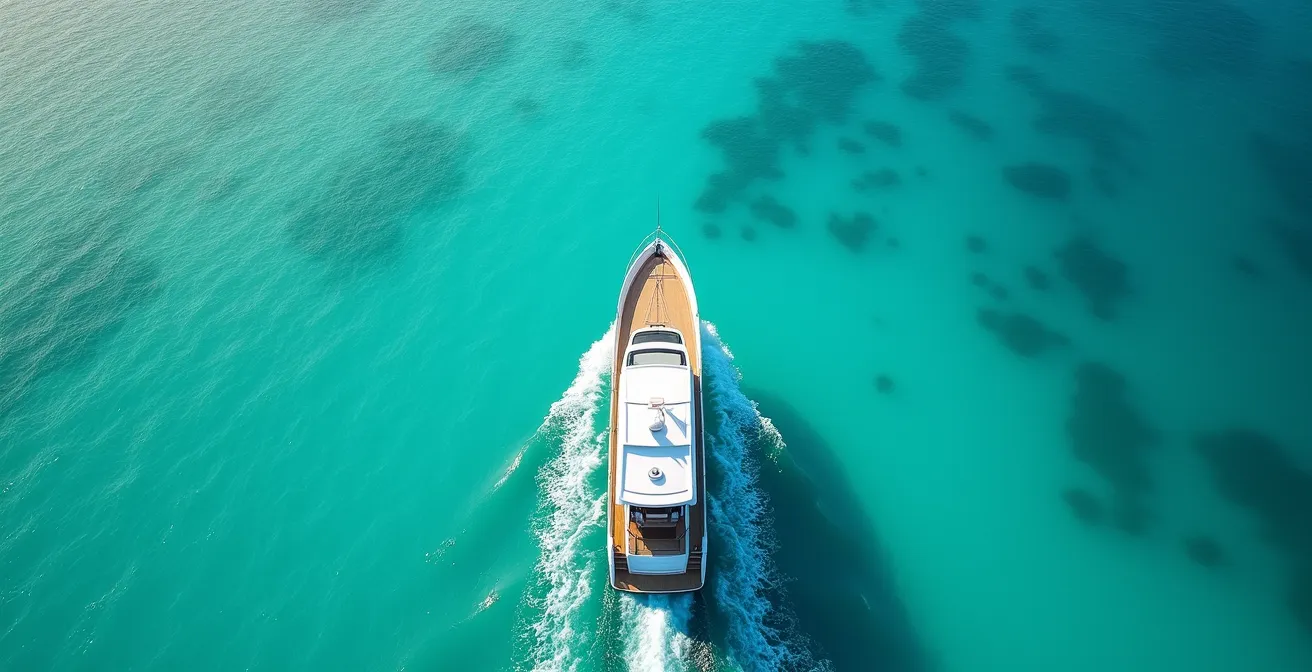
Conversely, a sunset charter provides a different kind of vibrancy. While the water itself becomes a dark, inky blue as the sun goes down, the surface becomes a canvas for the spectacular oranges, pinks, and purples of the sunset. The “vibrancy” here comes from the reflected light of the sky, creating a dramatic and romantic atmosphere. The focus shifts from the water beneath to the skyline and the sky above. The choice depends entirely on the mood you wish to create for your event.
Swimming Off the Yacht: What Are the Jellyfish Risks in October?
For many guests, swimming in the warm Arabian Gulf is a highlight of a yacht charter. As an organizer, ensuring their safety is your paramount concern. One of the primary marine risks to consider in Dubai is the presence of jellyfish. While a sting is rarely dangerous, it is painful and can quickly mar the luxury experience. Understanding the seasonal risks allows you to manage guest expectations and prepare accordingly.
The risk of encountering jellyfish is not constant throughout the year. Dubai’s marine conditions data shows that the main tourist season from October to May coincides with increased marine activity, including jellyfish blooms. Warmer waters during these months can lead to a higher prevalence of several species. While the captain will always check local conditions and choose swimming spots known to have fewer jellyfish, the risk can never be completely eliminated.
Your duty of care as an organizer involves two key actions: communication and preparation. First, transparently inform guests of the potential risk, especially during peak months like October. This manages expectations and encourages caution. Second, ensure the yacht is equipped with a proper anti-sting kit, or bring one yourself. A basic first-aid kit is insufficient. A dedicated anti-sting kit should be part of your standard event management checklist for any marine activity.
Action Plan: Your Essential Anti-Sting Kit
- Neutralizing Agent: Pack a sealed bottle of white vinegar. It is highly effective at neutralizing the venom of many box jellyfish species common to the region.
- Removal Tool: Include a credit card or a similar stiff, flat-edged item. This is used to scrape off any remaining tentacles from the skin without touching them.
- Allergy Response: Bring oral antihistamine tablets (like Benadryl) to manage potential systemic allergic reactions or severe itching.
- Symptom Relief: Pack a tube of hydrocortisone cream (1%) to apply after initial treatment to reduce inflammation and itching at the sting site.
- Extraction Tool: Include a pair of tweezers for the precise removal of any visible tentacle fragments that remain embedded in the skin after scraping.
By taking these professional precautions, you can mitigate both the risk and the impact of a jellyfish encounter, demonstrating a high level of care and preparedness to your client and guests.
The ‘Off-Road’ Clause: Why Your Luxury Rental Insurance Void on Sand?
This section may seem out of place in a yacht charter guide, but it contains one of the most critical lessons for anyone organizing luxury experiences in Dubai: every single clause in a rental agreement is strictly and technologically enforced. The “Off-Road” clause common in luxury car rental contracts serves as a powerful, analogous case study for the level of contractual scrutiny you must apply to your yacht charter agreement.
When you rent a luxury SUV in Dubai, the contract explicitly forbids off-road driving. This isn’t a suggestion; it’s an insurance invalidation clause. Driving on sand, even for a moment, can void all coverage and expose you to unlimited liability for damage. What many renters don’t realize is that this is not enforced by chance. The vast majority of luxury rental fleets in Dubai are equipped with real-time GPS telematics that monitor the vehicle’s location and status.
Case Study: The AED 5,000 Unpaved Access Road
A recent, documented incident provides a stark warning. As reported in an analysis of Dubai’s hidden rental costs, a renter was charged an immediate AED 5,000 penalty. Their transgression was not a dramatic desert safari but briefly driving on an unpaved construction access road near Dubai Marina to get a better photo. They never left the urban area, but the GPS data automatically flagged the “off-road” violation. The telematics data was presented as irrefutable evidence, and the charge was non-negotiable.
The lesson for a yacht charter organizer is profound. Your charter agreement will have its own set of “off-road clauses.” These might include prohibitions on bringing certain items aboard (like staining henna), exceeding designated passenger zones, or interfering with navigation equipment. Do not assume these are minor details. Just like the car rental company’s GPS, the yacht’s management has systems to monitor compliance. A breach of any clause, no matter how small it seems, can lead to non-negotiable penalties and financial liability. Scrutinize every line of your charter agreement with the same seriousness as if a GPS tracker were monitoring your every action.
The Scratch Scam: How to Document the Jet Ski Condition Before Riding?
Following the principle of strict contractual enforcement, we now address a proactive risk management strategy: creating an indisputable record of condition for all rented assets. The so-called “scratch scam” in the jet ski rental industry is another powerful analogy for yacht charter organizers. This scam involves a renter being blamed—and charged exorbitantly—for pre-existing minor damage (scratches, scuffs) upon returning the equipment. The only defense is un-disputable proof of the asset’s prior condition.
While the yacht itself is the primary asset, your charter package may include water toys like jet skis, sea bobs, or paddleboards. Each of these represents a potential point of financial liability. Failing to document their condition before use is a significant professional oversight. A verbal “it looks fine” from a deckhand offers zero protection against a post-charter damage claim. You must adopt a formal, professional documentation protocol.
The gold standard is a narrated video walkthrough. This is not a casual recording; it is the creation of a business record. The following protocol should be applied to the yacht itself upon boarding and to any ancillary water toy before it is used by your guests. It transforms you from a potential victim into a prepared manager.
- Initiate with Context: Start your 4K video recording with the rental agent or yacht crew member in the frame. State your name, the date, and the current time clearly. This establishes the context and timeline.
- Narrate and Film: Conduct a slow, deliberate walkaround of the asset. As you film, verbally call out any existing damage you see, no matter how minor. Say, “Noting a long scratch on the port side hull,” while focusing the camera on it.
- Focus on High-Risk Areas: Pay extra attention to areas prone to damage. For a jet ski, this includes the hull, bumpers, steering column, and decals. For a yacht, focus on railings, teak decks, upholstery, and glass surfaces.
- Document Post-Use: Conduct the exact same video documentation process immediately upon returning the asset, again with the agent or crew member present. This proves no damage occurred during your use.
- Secure the Evidence: Do not leave the rental location without saving a backup of your videos to a cloud service (e.g., Dropbox, Google Drive) from your phone. This protects your evidence from being “accidentally” deleted.
This protocol may seem excessive, but in a dispute, it is your only reliable defense. It shifts the burden of proof and demonstrates a level of professionalism that often deters spurious claims from the outset.
Key Takeaways
- Always de-rate a yacht’s advertised ‘legal capacity’ by at least 25-30% for a standing party to determine a realistic ‘comfort capacity’.
- Institute a mandatory pre-use documentation protocol: record a narrated 4K video of the yacht and any water toys to create an indisputable record of pre-existing condition.
- Treat all clauses in your charter agreement as strictly enforced, using issues from analogous Dubai rentals (like car off-roading penalties) as a warning against dismissing any rule as trivial.
Nikki Beach or Drift: Which Club Justifies the $100 Entry Fee?
The final consideration for an event organizer often extends beyond the charter itself to the on-shore experiences that bookend the day. In Dubai, a common extension of a yacht charter is a visit to a luxury beach club. This presents a final decision point that perfectly encapsulates the theme of this guide: justifying cost through value. A $100 entry fee is not just a price; it’s an investment in a specific atmosphere, and choosing the right one is crucial for guest satisfaction.
Comparing two iconic Dubai venues, Nikki Beach and Drift Beach, highlights this decision matrix. Both command premium entry fees, but they deliver vastly different experiences. Your choice depends entirely on the demographic and desired mood of your group. As the organizer, your job is to match the venue’s “product” to your guests’ expectations. This is the essence of providing value beyond just securing access.
The following comparison, based on insights from the Dubai luxury charter market, breaks down the core value proposition of each venue.
| Feature | Nikki Beach | Drift Beach |
|---|---|---|
| Atmosphere | High-energy party, DJ-focused | Chic, relaxed, sophisticated |
| Crowd Type | Younger, party-seekers | Mature, conversation-friendly |
| Entry Fee Value | Often redeemable on F&B | Premium for exclusive access |
| Best Time | Weekend parties | Weekday luxury experience |
| Signature Cocktail Price | AED 75-95 | AED 85-110 |
As a Dubai Nightlife Expert noted in the Pure Travel Dubai Guide, the choice is strategic:
A weekday at Drift might offer a near-private luxury experience, making the fee feel worthwhile. A weekend at Nikki Beach buys access to a world-class party.
– Dubai Nightlife Expert, Pure Travel Dubai Guide
This final analysis is a microcosm of your entire role. From choosing a catering package to selecting a beach club, the goal is not to find the cheapest option, but to understand the contractual and operational realities to deliver the maximum value and the most appropriate experience for your client, free from any negative surprises.
To effectively manage your next event’s charter, the next step is to apply this contractual mindset to your selection process. Begin by drafting a clear list of your non-negotiable requirements—from comfort capacity to service expectations—before contacting any provider.