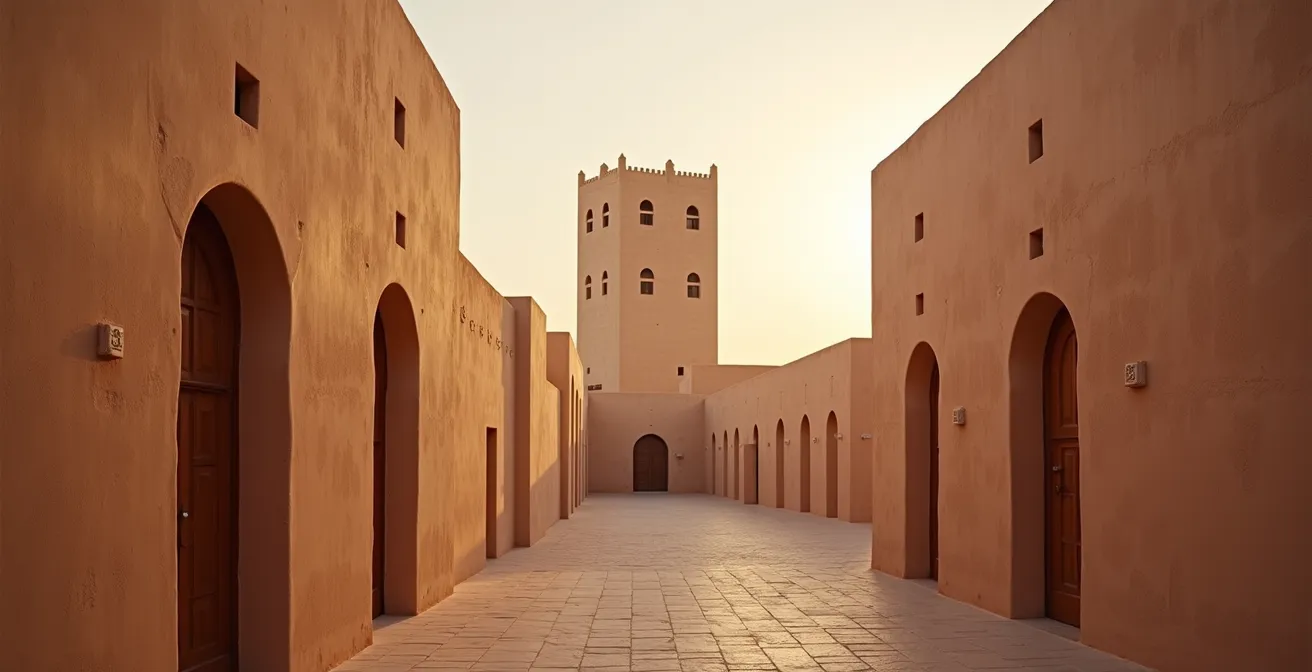
The key to navigating Al Fahidi is not to wander aimlessly but to learn the language of its architecture.
- Ancient design features like wind towers and narrow alleys were not just decorative; they were functional systems for cooling and social organization that you can use as a map.
- By observing architectural details, solar positioning, and sensory cues, you can move with purpose and uncover the district’s true hidden gems.
Recommendation: Instead of looking down at a screen, look up at the wind towers and into the alleys. Treat the district as a text to be read, not a maze to be solved.
To stand at the entrance of Al Fahidi Historical Neighbourhood is to feel a delightful sense of disorientation. The common advice is to simply “get lost” in its labyrinthine alleyways. While there is a certain romance to aimless wandering, the true explorer—the one who wishes to connect with the soul of a place—seeks more than serendipity. They seek understanding. The question is not just *where* to go, but *how* to see. Many know this area by its older name, Bastakiya, but few know how to read its story written in coral stone and gypsum. Entry to the entire district is free, an open invitation to step back in time.
But what if the maze isn’t a maze at all? What if it’s a perfectly logical system, an ancient form of GPS embedded into the very walls? The key to unlocking Al Fahidi lies in abandoning the digital map and embracing architectural wayfinding. This guide moves beyond listing attractions and instead teaches you to read the environmental and social cues of the district’s design. The orientation of a wind tower, the width of a sikka, the scent of coffee drifting from a hidden courtyard—these are your true navigational tools. By understanding the ‘why’ behind the design, you transform from a lost tourist into a knowledgeable urban historian, capable of navigating with intent and discovering secrets hidden in plain sight.
This journey will equip you with the knowledge to interpret the district’s unique features, from its ingenious cooling systems to its vibrant cultural hubs. Follow along to learn how to experience this historical treasure not as a puzzle, but as a conversation with the past.
Summary: Reading the Walls: An Explorer’s Guide to Al Fahidi
- How Do Ancient Wind Towers Cool Houses by 5 Degrees?
- XVA vs Majlis Gallery: Which Offers Better Local Art?
- Morning Silence vs Evening Bustle: When to Visit Al Fahidi?
- Why Ethiopian Coffee Ceremony Is Part of Dubai’s History?
- Dining in a Bastakiya Courtyard: Is it Worth the Premium Price?
- Is the Dubai Opera Garden Open to Public Without a Ticket?
- The Sikkat: Why Narrow Alleyways Were Designed for Shade and Privacy?
- Etihad Museum or Dubai Museum: Which One Explains the Union Better?
How Do Ancient Wind Towers Cool Houses by 5 Degrees?
The first lesson in architectural wayfinding in Al Fahidi is to look up. The iconic barjeel, or wind towers, that punctuate the skyline are far more than decorative features; they are masterfully engineered passive air-conditioning units. Their design harnesses the prevailing winds, channeling cooler air down into the living spaces below while pushing hot, stale air out. The effect is remarkable; studies confirm that wind towers can lower interior temperatures by as much as 10 degrees Celsius. This natural cooling system was the key to comfortable living in the sweltering heat of the Gulf long before modern electricity.
More importantly for the savvy navigator, these towers are a form of social cartography. You can discern the wealth and status of the original inhabitants just by observing the barjeel. A taller tower, sometimes rising four or five stories, indicated a wealthy merchant family, powerful enough to build higher and catch stronger breezes. The design also tells a story: towers with openings on only one side were oriented to capture the consistent sea breeze from the creek, while four-directional towers were a more complex adaptation for variable winds. By learning to identify these different designs, you are no longer just looking at buildings; you are reading the social and economic history of the district.
XVA vs Majlis Gallery: Which Offers Better Local Art?
Once you begin navigating by architecture, you’ll inevitably be drawn into the cool, shaded courtyards that house Al Fahidi’s renowned art galleries. The question is not which gallery is “better,” but which narrative you wish to explore. The district’s two most prominent art hubs, XVA Gallery and Majlis Gallery, offer contrasting philosophies. As the gallery itself states, XVA is a leading Middle Eastern gallery specializing in contemporary art from the Arab world and Iran. It embodies “The Collector” ethos, focusing on emerging artists and conceptual works within a dynamic, multi-sensory hub that includes a boutique hotel and a popular café.
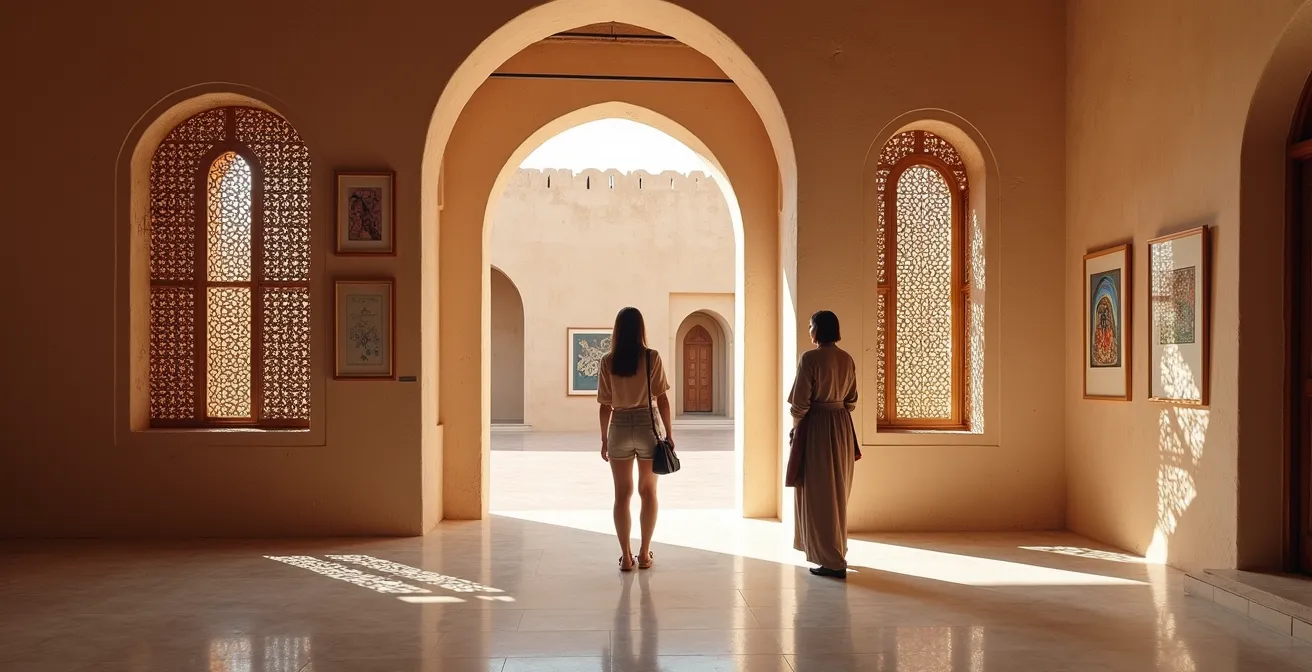
In contrast, Majlis Gallery feels like “The Historian.” Founded in 1989, it is one of the oldest galleries in Dubai and focuses on established artists and regional heritage through more traditional paintings and sculptures. The experience is one of quiet contemplation in a beautifully restored wind-tower house, centered around a magnificent henna tree. Choosing between them depends entirely on your interest: do you seek the cutting edge of the contemporary art scene, or a deep dive into the region’s artistic heritage?
To help you decide, this comparison breaks down their distinct identities:
| Aspect | XVA Gallery | Majlis Gallery |
|---|---|---|
| Founded | 2003 | 1989 |
| Focus | Contemporary Middle Eastern & Iranian art | Traditional paintings & sculptures by international artists |
| Philosophy | The Collector – emerging artists, conceptual works | The Historian – established artists, regional heritage |
| Experience | Multi-sensory hub with gallery, hotel, and café | Classical gallery in restored wind-tower house |
| Setting | Dynamic courtyard for art discussions over lunch | Quiet contemplation around magnificent henna tree |
Morning Silence vs Evening Bustle: When to Visit Al Fahidi?
An expert navigator knows that *when* you explore a place is as important as *where* you go. Al Fahidi is a district with a distinct daily rhythm that dramatically alters the experience. While the optimal visiting period for comfortable temperatures is between November and March, the time of day you choose will dictate what you see and how you navigate. A visit in the quiet of the morning (9-11 am) offers a meditative experience. You can observe the district waking up, use the long, sharp shadows cast by the buildings as a natural compass, and explore the museums just as they open, free from crowds.
As the sun climbs higher, the district enters a “siesta” period (1-4 pm), and many smaller shops and galleries close their doors. This is the time to embrace the wisdom of the original architecture and seek refuge in the cool, shaded courtyards. The late afternoon (4-5 pm) brings the “golden hour,” a photographer’s dream when the warm light beautifully defines the textures of the coral stone walls. From 5 pm onwards, the evening bustle begins. The district comes alive with a new energy, and your navigation can shift to being sensory. Following the sound beacons of chatter from a restaurant or the clinking of coffee cups from a café will lead you to the hubs of activity. A modest dress code, covering shoulders and knees, is recommended at all times out of respect for local culture.
Action Plan: Navigating Al Fahidi’s Daily Rhythm
- Morning (9-11 am): Visit museums as they open, observe shopkeepers setting up, and use the long shadows cast by buildings as a directional compass to find your bearings.
- Mid-day (1-4 pm): Embrace the traditional siesta period when many smaller venues close. Use this time to seek shade in covered courtyards and appreciate the passive cooling architecture.
- Late Afternoon (4-5 pm): Capitalize on the “golden hour” for photography, as the low sun highlights the intricate textures of the coral stone and gypsum walls.
- Evening (5 pm onwards): Shift to sensory navigation. Follow the auditory cues from bustling restaurants and galleries to locate the liveliest parts of the district.
- Night: Experience the “blue hour” atmosphere after sunset. The glow from traditional lanterns creates a mysterious ambiance and a completely different visual experience of the alleyways.
Why Ethiopian Coffee Ceremony Is Part of Dubai’s History?
As you navigate Al Fahidi using sensory cues, you will inevitably be guided by the rich, aromatic scent of roasting coffee. This is not just a pleasant aroma; it’s an olfactory clue to Dubai’s deep historical connection to global trade routes, particularly with the Horn of Africa. The presence of the traditional Ethiopian coffee ceremony in the heart of Old Dubai is a living testament to these ancient maritime links. Long before oil, Dubai was a bustling port, and coffee was one of the many goods traded across the Indian Ocean. The Ethiopian ceremony, or Buna, is widely considered the origin of coffee culture itself.
The Living History at the Dubai Coffee Museum
Located in Al Fahidi, the Dubai Coffee Museum is not a static display but a dynamic experience. The museum actively demonstrates the Ethiopian coffee rituals, which are believed to be the origin of coffee culture. Staff prepare coffee the traditional way, roasting the green beans in a pan right in front of visitors. The space even includes a dedicated Ethiopian ceremonial coffee area, allowing for a direct comparison with regional styles and highlighting the historical significance of this specific tradition in Dubai’s multicultural fabric.
The experience offers a fascinating contrast between two distinct coffee cultures: the ceremonial Ethiopian Buna and the local Emirati Gahwa. Understanding their differences deepens one’s appreciation for the cultural tapestry of the region.

| Aspect | Ethiopian Buna | Emirati Gahwa |
|---|---|---|
| Roast Level | Dark roast | Light roast |
| Preparation | Pan-roasted on spot, multi-step ritual | Pre-roasted, cardamom added |
| Serving | In small, handleless cups, often with popcorn | In small finjans, served with dates |
| Social Function | Ceremonial gathering, community bonding | A gesture of hospitality and welcome |
| Equipment | Jebena (clay pot) | Dallah (brass or silver pot) |
Dining in a Bastakiya Courtyard: Is it Worth the Premium Price?
Many of Al Fahidi’s most atmospheric dining experiences are found within its historic courtyards, often carrying a premium price tag. Is it worth it? The answer lies in understanding what you are paying for. You are not just buying a meal; you are purchasing a unique spatial and historical experience. As the official guide from Emirates Tourism notes, “Gorgeous courtyard cafés dot the nostalgic space”, and this nostalgia is the key. Dining in a Bastakiya courtyard is an opportunity to physically inhabit the social heart of a traditional Emirati home. These courtyards were the center of family life—private, open-air living rooms protected from the public gaze and the harsh sun.
The premium price reflects the privilege of accessing these beautifully restored, semi-private spaces. It pays for the ambiance, the tranquility, and the rare opportunity to experience the city’s heritage from the inside. From an urban historian’s perspective, this is a form of immersive research. You are experiencing the architectural principles of shade, privacy, and community firsthand. The cost contributes to the preservation of these magnificent buildings, allowing them to remain living, breathing parts of the city rather than sterile museum pieces. So, while the food itself might be found elsewhere, the experience of enjoying it within the cool, coral-stone walls of a hundred-year-old courtyard is exclusive to this place. It is a price paid for atmosphere, authenticity, and a direct connection to the past.
Is the Dubai Opera Garden Open to Public Without a Ticket?
Stepping away from the dense, historical fabric of Al Fahidi and journeying to modern Downtown Dubai offers a study in contrasts. Here, the concept of public space is reimagined on a grand scale, exemplified by the Dubai Opera. A common question is whether its beautiful surrounding garden can be enjoyed without a show ticket. The answer is a resounding yes. The Dubai Opera Garden is a public space, fully accessible to anyone wishing to enjoy its serene atmosphere and stunning architectural views. No ticket is required to access the outdoor areas.
An urban historian might draw a fascinating parallel here. The courtyards of Al Fahidi were inward-facing, private hearts of a home, creating a sense of community for the family. The Opera Garden, in contrast, is an outward-facing, public “courtyard” for the entire city. It is designed for spectacle and people-watching. For the best experience, you can access the garden via the main promenade and visit in the late afternoon for beautiful golden hour light on the dhow-shaped building. Arriving 30 minutes before a show offers prime opportunities to watch the city’s glitterati, while the western side of the garden provides the most iconic views of the Opera’s architecture against the backdrop of the Burj Khalifa. It is a modern reinterpretation of the gathering space, open and accessible to all.
The Sikkat: Why Narrow Alleyways Were Designed for Shade and Privacy?
The narrow, winding alleyways, or sikkas, are the circulatory system of Al Fahidi and the source of its maze-like reputation. However, their design is not random but a highly intelligent response to two core needs: climate and privacy. The dense urban fabric, which contains around 60 traditional Emirati houses, was designed to create maximum shade. The narrowness of the sikkas ensures that for most of the day, their walls and high buildings cast deep shadows, providing a cool refuge from the intense sun. Their orientation, often facing north-south towards Dubai Creek, also transforms them into wind tunnels, enabling the Venturi effect to pull breezes from the waterfront and circulate air throughout the district.
The second principle is privacy, a cornerstone of traditional Islamic architecture. The winding nature of the alleys prevents a direct line of sight into the courtyards and doorways of homes. As the official heritage site description notes, the community’s care for privacy is evident in the scarcity of front windows, which are typically narrow and placed high on the walls. This design ensures that family life within the courtyards remains shielded from the public thoroughfare. The buildings themselves are also oriented southwest towards the qibla, a subtle religious and cultural layer embedded in the urban plan. Once you understand these principles, the sikkas are no longer confusing; they become a readable system of climate control and social respect.
Action Plan: Your Architectural Wayfinding Audit
- Landmark Triangulation: Identify three distinct wind tower designs (e.g., single-direction, four-direction, varying heights) from different points in the district and plot them on a mental map.
- Solar Compass Check: Stand in a north-south oriented sikka. Note the precise direction of the shadows in the morning versus the late afternoon to establish a reliable east-west axis.
- Acoustic Mapping: Find a quiet courtyard. Close your eyes and listen for 60 seconds. Identify the direction of distinct sounds: the call to prayer, the hum of abras on the creek, or chatter from a souk.
- Material Timeline: Locate and touch three different primary building materials (weathered coral stone, smoother gypsum, and palm fronds or ‘arish’). Try to deduce the relative age of the structures based on these materials.
- Route Integration: Challenge yourself to walk from the Dubai Museum to XVA Gallery using only these non-digital cues. Note where your architectural and sensory compass felt most accurate.
Key Takeaways
- Wind towers are not just decorative; they are directional and social signposts that reveal the status and orientation of buildings.
- The narrow, winding sikkas (alleys) are a sophisticated climate-control system designed for shade and airflow, whose orientation can guide you towards the creek.
- The time of your visit dramatically changes the navigational experience, shifting from visual cues in the morning to sensory ones in the evening.
Etihad Museum or Dubai Museum: Which One Explains the Union Better?
Your exploration of Dubai’s history culminates in a choice between two key institutions: the Dubai Museum, housed within Al Fahidi’s 18th-century fort, and the modern Etihad Museum, located a short drive away. They do not tell the same story, and choosing between them depends on the historical question you want answered. Do you want to understand the life of Dubai’s people before oil, or do you want to understand the political birth of the United Arab Emirates as a nation? The Dubai Museum, as Lonely Planet describes, charts Dubai’s “turbo-evolution from fishing and pearling village to global centre of commerce.” It offers a “bottom-up” social history through immersive, life-sized dioramas that create a tangible time capsule of pre-modern life.
The Etihad Museum, by contrast, tells a “top-down” political history. Its focus is sharp and specific: the period from the 1950s to the 1970s, culminating in the unification of the Emirates in 1971. Housed in a stunning 21st-century building on the very site where the union agreement was signed, it uses high-tech multimedia displays and historical documents to explain the formation of the modern state. One museum explains the *people*, the other explains the *nation*. For a visitor exploring Al Fahidi, the Dubai Museum is the logical starting point, as it provides the direct historical context for the very buildings you are walking amongst. The Etihad Museum is the sequel, explaining how the world of the Dubai Museum evolved into the nation of today.
| Aspect | Etihad Museum | Dubai Museum |
|---|---|---|
| Historical Focus | UAE formation in 1971 | Pre-oil Dubai life |
| Narrative Style | Top-down political history | Bottom-up social history |
| Time Period | 1950s oil discovery to present | Traditional life to 1970s |
| Museum Style | Modern interactive displays | Life-sized dioramas in fort |
| Building | 21st-century architecture | 18th-century Al Fahidi Fort |
| Experience Type | High-tech multimedia | Immersive time capsule |
Now equipped with the ability to read the architecture and understand its historical context, your next visit to Al Fahidi will be transformed. The logical next step is to put this knowledge into practice and choose which historical narrative you wish to explore first: the life of the people or the birth of the nation.