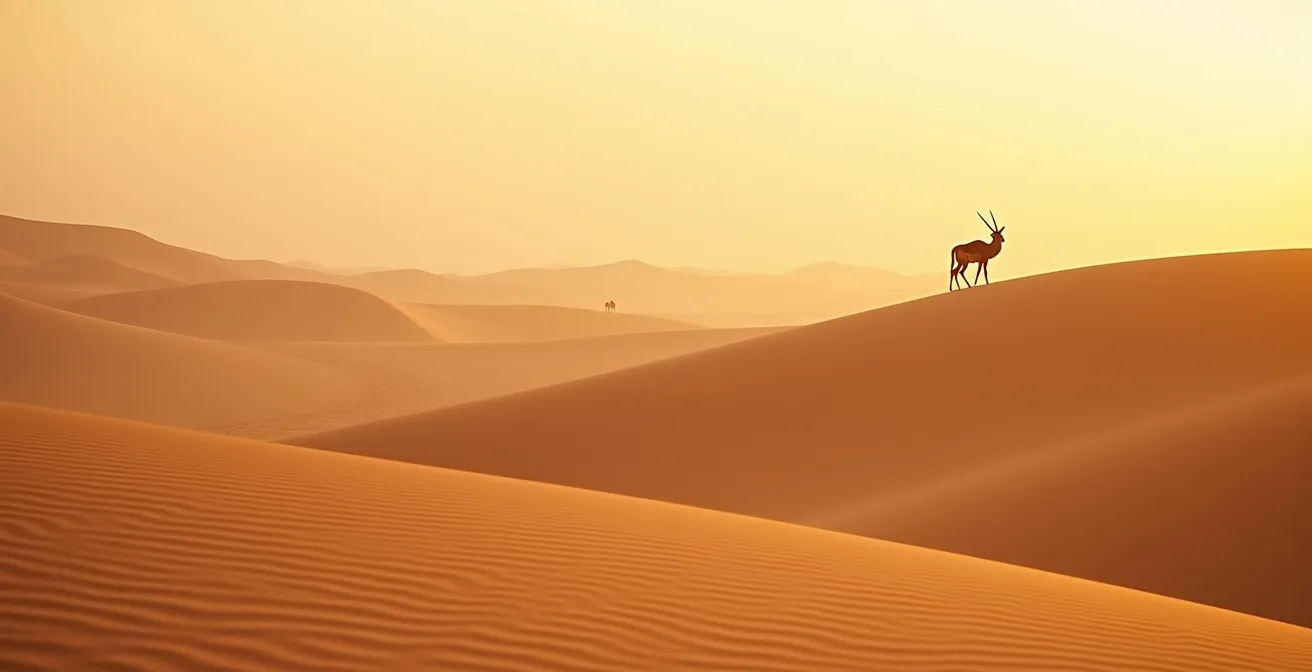
The restriction on private vehicles in the Dubai Desert Conservation Reserve is not an arbitrary rule designed to frustrate independent explorers. It is the fundamental mechanism that preserves the fragile desert ecosystem you come to witness. This controlled access is the only way to protect vulnerable wildlife, prevent irreversible habitat damage, and ensure the experience remains authentically wild, not a regulated park. Understanding this policy is the first step to becoming a partner in conservation, not just a visitor.
I understand the impulse. You have a capable 4×4, a spirit of adventure, and you see a vast, open desert. The natural question is, “Why can’t I just drive in?” As a conservation officer for the Dubai Desert Conservation Reserve (DDCR), I hear this often. It comes from a place of curiosity and a desire for authentic exploration, which I respect. However, the answer is critical to the very existence of the wilderness you seek. The barrier isn’t there to limit your experience; it’s there to make an experience possible at all.
Many assume the restriction is simply about safety or crowd control. While those are factors, the core reason is a scientific one rooted in conservation biology. An unregulated influx of private vehicles would irrevocably damage the delicate balance we work tirelessly to maintain. The DDCR is not a public park with paved roads; it is a protected sanctuary for over 562 known species, a place where years of dedicated effort have brought animals like the Arabian Oryx back from the brink of extinction. The rules you encounter are not obstacles; they are the invisible fence that guards one of the UAE’s most precious natural treasures.
This guide will walk you through the specific, science-backed reasons behind our access protocols. We will explore the unique wildlife you can see precisely because of these protections, the hidden dangers of seemingly harmless activities like flying a drone or leaving a single piece of trash, and how the reserve’s entire philosophy, from its architecture to its partnerships, is built on a principle of minimal impact. By the end, you will see the reserve not as a place with rules, but as a living system you can responsibly explore.
To understand the full scope of our conservation mandate, this article details the specific policies and the reasons behind them. Explore the sections below to gain a deeper appreciation for the delicate balance of this unique desert ecosystem.
Summary: The Science Behind the DDCR’s Access-Only Policy
- Oryx vs Gazelle: How to Identify the Species You Will See?
- Why Drones Are Strictly Prohibited in the Reserve?
- The ‘Leave No Trace’ Rule: Fines for Dropping Trash in the DDCR
- Al Maha Resort Access: Can You Visit Just for Lunch?
- Which Birds Can You Spot During Winter Migration?
- Artificial Reefs: How Floating Homes Affect Local Marine Life?
- Coral Stone and Gypsum: Why Use Sea Materials for Desert Walls?
- How to Identify a Truly Exclusive Desert Safari in Dubai for Under $500?
Oryx vs Gazelle: How to Identify the Species You Will See?
The prime reason for our strict access controls is the protection of iconic species like the Arabian Oryx and desert gazelles. These are not zoo animals; they are wild, sensitive populations that have been painstakingly reintroduced. The DDCR is a story of conservation success. As Gerhard Erasmus, the Reserve Manager, often notes, this work is paramount. He highlighted the gravity of the initial situation:
When DDCR was set up, the Arabian Oryx was still ‘Extinct in the Wild’ on the IUCN Red List
– Gerhard Erasmus, Dubai Desert Conservation Reserve Manager
Today, thanks to these protected grounds, conservation data shows that over 10,000 Arabian oryx now live in the UAE, with a significant population thriving here. To appreciate them, you must learn to distinguish them. The Arabian Oryx is a robust, whitish antelope with long, straight, spear-like horns. Both males and females carry these impressive horns. In contrast, the smaller, more delicate Arabian Gazelle is tan-coloured with a white underbelly, and typically only the males have the shorter, elegantly curved horns. Unregulated vehicles disrupt their breeding and foraging patterns, causing stress that can devastate these hard-won populations. Seeing them from a licensed operator’s vehicle ensures they remain undisturbed.
Why Drones Are Strictly Prohibited in the Reserve?
The ban on drones is absolute and non-negotiable. While they seem like a harmless way to get a spectacular photo, to wildlife, they are a terrifying, high-pitched aerial predator. This isn’t speculation; it’s documented fact. The acoustic signature and erratic movement of a drone trigger a primal fear response in birds and mammals, causing them to flee, abandon nests, and waste precious energy. This concept of an acoustic sanctuary, free from unnatural noise, is a cornerstone of the reserve’s management. The impact can be catastrophic; a documented incident in California showed 1,500 eggs abandoned by panicked birds after a single drone flew over their nesting colony. Such an event in the DDCR could wipe out an entire generation of our ground-nesting birds.
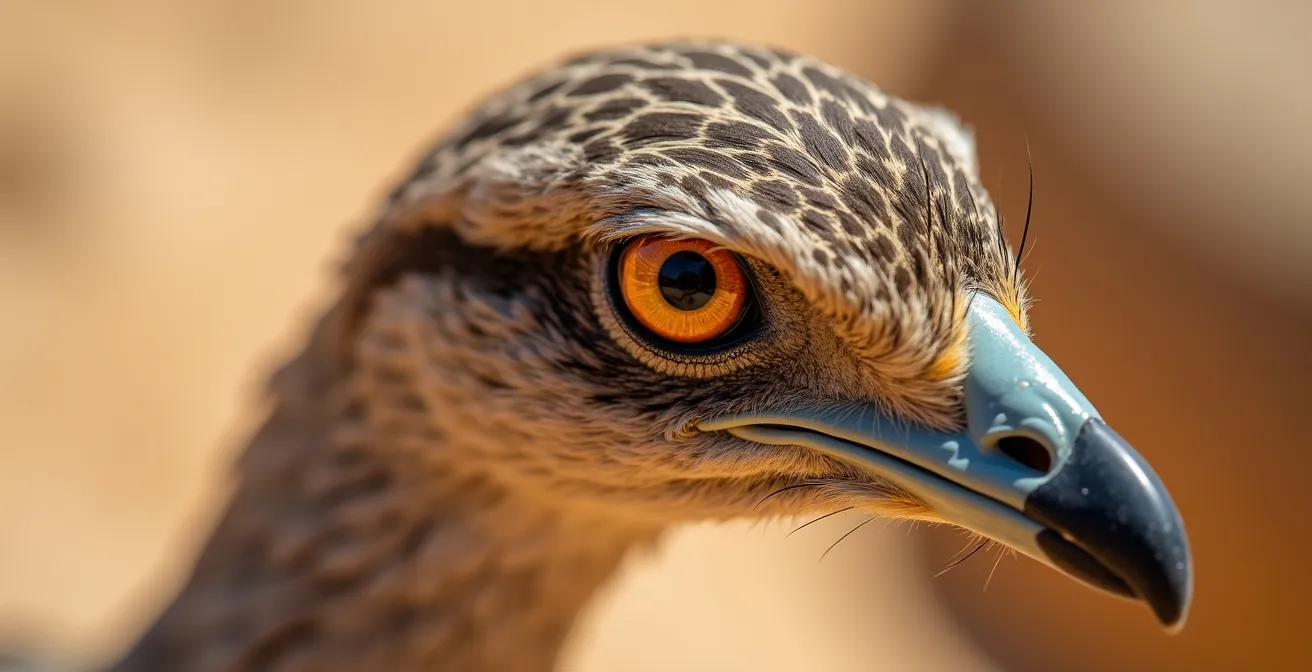
Even if an animal doesn’t flee, the drone induces significant physiological stress, affecting its health and reproductive success. The image you see above captures the essence of this terror—the reflection of a vast, empty sky in a startled eye. Our policy ensures the only things flying overhead are the native and migratory birds we are sworn to protect. Respecting this rule is respecting the lives of the animals you’ve come to see. A photograph is not worth the life or well-being of a wild creature. The designated tracks for safari vehicles are designed to minimize this very behavioral disturbance.
The ‘Leave No Trace’ Rule: Fines for Dropping Trash in the DDCR
The principle of “Leave No Trace” is more than a catchy phrase; it’s an operational imperative across the entirety of the 225 square kilometres protected area that is the DDCR. The prohibition of private vehicles is directly linked to this. More cars mean more people, and statistically, more people mean more litter. Even a single discarded item can have a devastating, long-lasting impact on this arid environment. Unlike a rainforest, the desert’s dry climate and intense sun do not break down waste quickly. A plastic bottle can take centuries to degrade, posing a constant threat of entanglement or ingestion to wildlife. Even organic waste like an apple core is harmful, as it can alter the foraging patterns of wild animals and habituate them to human food.
The following table illustrates why our enforcement is so strict. The long-term consequences of seemingly minor infractions are severe, justifying the significant fines for anyone caught littering. Your presence in the reserve, managed through a licensed operator, ensures these principles are upheld.
| Item Type | Decomposition Time | Environmental Impact |
|---|---|---|
| Cigarette butt | 1-5 years | Leaches toxic chemicals into sand |
| Plastic bottle | 450 years | Wildlife entanglement risk |
| Food waste | Weeks-months | Alters wildlife foraging patterns |
| Glass | 1 million years | Fire hazard from magnification |
Beyond litter, unregulated foot and vehicle traffic leads to soil compaction. The desert crust is a fragile, living layer of microorganisms. Driving or walking over it destroys this layer, preventing plant growth and increasing erosion. This is why you cannot simply wander on foot; even your footprints have a lasting impact.
Al Maha Resort Access: Can You Visit Just for Lunch?
This is a common question that touches upon the core philosophy of the DDCR: exclusivity for the sake of conservation. The Al Maha, a Luxury Collection Desert Resort & Spa, is located within the reserve’s boundaries. Its operation is intrinsically tied to our conservation mission. For this reason, access to the resort is strictly controlled. Generally, you cannot visit the resort just for lunch or a brief tour. Access is reserved almost exclusively for registered overnight guests.
This policy is not about social elitism; it is a powerful conservation tool. By severely limiting the number of people and vehicles moving within this core area of the reserve, the resort minimizes the human footprint. This creates a unique sanctuary where wildlife, particularly the herds of Oryx and gazelles, can roam with minimal disturbance, often right up to the private villa pools. Allowing day-trippers for meals would necessitate a constant flow of traffic, undermining the very tranquility that makes the Al Maha experience and the surrounding ecosystem so special. Some exclusive tour operators, like Platinum Heritage, may have packages that include activities at the resort, but these are highly structured and adhere to the same principle of minimal impact. It’s a clear example of prioritizing ecosystem integrity over commercial volume.
Which Birds Can You Spot During Winter Migration?
The DDCR is not just a home for resident mammals; it is a vital stopover point on the Central Asian Flyway for migratory birds. The ban on private vehicles is especially critical for protecting these transient guests. Many species are ground-nesting birds, and a single off-road vehicle could crush a nest of eggs or chicks without the driver ever knowing. The delicate footprints on the sand are a constant reminder of the life teeming on the desert floor, life that is invisible to a fast-moving vehicle.

Our protected lakes and wetlands become a haven during the winter months. For instance, in a recent count, wildlife experts documented 6,000 Mallards taking refuge here during the 2023 winter. Birdwatchers on guided tours can look for a variety of species. Keep your binoculars ready for:
- Greater Spotted Eagle: A magnificent raptor with guaranteed sightings from October to April.
- Steppe Eagle: Another large eagle visible during the peak winter months.
- Eastern Imperial Eagle: An apex predator you might see hunting other birds like mallards.
- Green-winged Teals: Often found in the man-made lakes that provide a critical water source.
- Flamingos: While more famous at Ras Al Khor, small groups sometimes visit the reserve’s water bodies.
This rich biodiversity is a direct result of a controlled, quiet environment. The absence of random traffic and noise allows these birds to rest and feed, gathering the strength to continue their incredible journeys.
Artificial Reefs: How Floating Homes Affect Local Marine Life?
The term “artificial reef” immediately brings to mind a marine environment. While the DDCR is a terrestrial desert ecosystem, the underlying principle of an artificial reef offers a powerful analogy for our work. In the ocean, artificial reefs are structures placed by humans to create new, concentrated habitats for marine life where none existed. They become hotspots of biodiversity. In the same vein, the DDCR itself can be seen as a kind of terrestrial “reef” on a massive scale. We have created a structured, protected “island” of habitat within a sea of regional development.
Within this 225-square-kilometer zone, we actively manage resources to boost biodiversity far beyond what would survive in an unprotected state. The man-made lakes that attract those 6,000 mallards are a perfect example. They are deliberate interventions, just like sinking a ship to create a reef. By banning private vehicles, we protect the integrity of this “reef.” Unregulated access would erode its edges, pollute its core, and drive away the very species that make it a vibrant center of life. The result of this protection is a concentration of life—an oasis of biodiversity that stands in stark contrast to the surrounding areas, proving the conservation model’s success.
Coral Stone and Gypsum: Why Use Sea Materials for Desert Walls?
There is a common misconception that traditional architecture in the region relies heavily on materials from the sea, like coral stone. While this was true along the immediate coast, it is fundamentally at odds with the conservation philosophy of the DDCR. Our guiding principle is hyper-local sourcing to minimize carbon footprint and maintain authenticity. Therefore, the premise of using “sea materials” for our desert walls is incorrect; we do the exact opposite. The reserve’s boundary walls and traditional-style buildings are constructed using materials sourced from the desert itself, primarily gypsum, or ‘juss’ as it’s known locally.
This choice is a deliberate part of our commitment to sustainable practices. By sourcing materials on-site or from nearby quarries, we drastically reduce transportation emissions. The Dubai Desert Conservation Reserve’s use of these traditional methods is a case study in sustainable construction that honors heritage. It demonstrates that environmental responsibility extends beyond wildlife management to every aspect of the reserve’s operations, including its infrastructure. Using gypsum is not just about aesthetics; it is a physical manifestation of our commitment to a low-carbon, low-impact existence. It ensures that the very structures that define our boundaries are in harmony with the environment they are built to protect.
Key takeaways
- The ban on private cars is the primary tool for protecting the DDCR’s fragile ecosystem and reintroduced wildlife.
- Disturbances from vehicles, drones, and even walkers cause stress to animals and damage to the land, justifying controlled access.
- Choosing a DDCR-licensed operator is the only way to visit the reserve, ensuring your visit supports conservation efforts directly.
How to Identify a Truly Exclusive Desert Safari in Dubai for Under $500?
Having understood the “why” behind our rules, the final step is understanding “how” to visit responsibly. A “truly exclusive” desert safari is not defined by luxury, but by its commitment to conservation. It means choosing one of the few operators officially licensed to enter the DDCR. These operators are our partners; they are trained by us, follow our strict guidelines, and contribute a portion of their fee directly to our conservation funds. Any tour offering “desert safari” outside our gates is operating in unregulated areas, contributing to the very environmental degradation we fight against. The difference in impact is stark.
Comparative Analysis: DDCR Licensed vs. Unregulated Safari Operators
To make an informed choice, consider the fundamental differences between an operator who has earned the right to enter the reserve and one who has not. The following table, based on information from certified partners, clarifies the distinction.
| Feature | DDCR Licensed Operators | Unregulated Desert Tours |
|---|---|---|
| Wildlife Sightings | High probability, protected herds | Rare, disturbed populations |
| Environmental Impact | Designated tracks only | Random off-roading damage |
| Guide Training | DDCR certified ecology experts | Basic driver training |
| Conservation Fee | Included, directly to reserve | None |
| Group Size | Limited for minimal impact | Large groups common |
An exclusive and ethical experience is therefore one that takes place *inside* the reserve. While prices vary, it is entirely possible to find a genuine DDCR conservation drive from a licensed operator for under $500. This is not just a tour; it is a contribution to a vital conservation project.
Action Plan: Verifying Your DDCR-Approved Safari Operator
- Check the Official List: Visit the official DDCR website and consult the list of approved tour operators. Do not rely on third-party claims.
- Ask for the Conservation Fee: Inquire if a portion of your fee goes directly to the DDCR conservation fund. A licensed operator will proudly confirm this.
- Confirm the Itinerary: Ensure the tour explicitly states that it takes place *inside* the Dubai Desert Conservation Reserve, not just a generic “Dubai desert.”
- Inquire About Guide Certification: Ask if your guide is certified by the DDCR. Their knowledge of ecology is a key differentiator.
- Look for Small Group Sizes: Licensed operators prioritize minimal impact, which often translates to smaller, more intimate tour groups.
Choosing a licensed operator is the single most important decision you can make. It transforms you from a simple tourist into a steward of the desert, ensuring that the wild beauty of the DDCR can be preserved for generations to come.