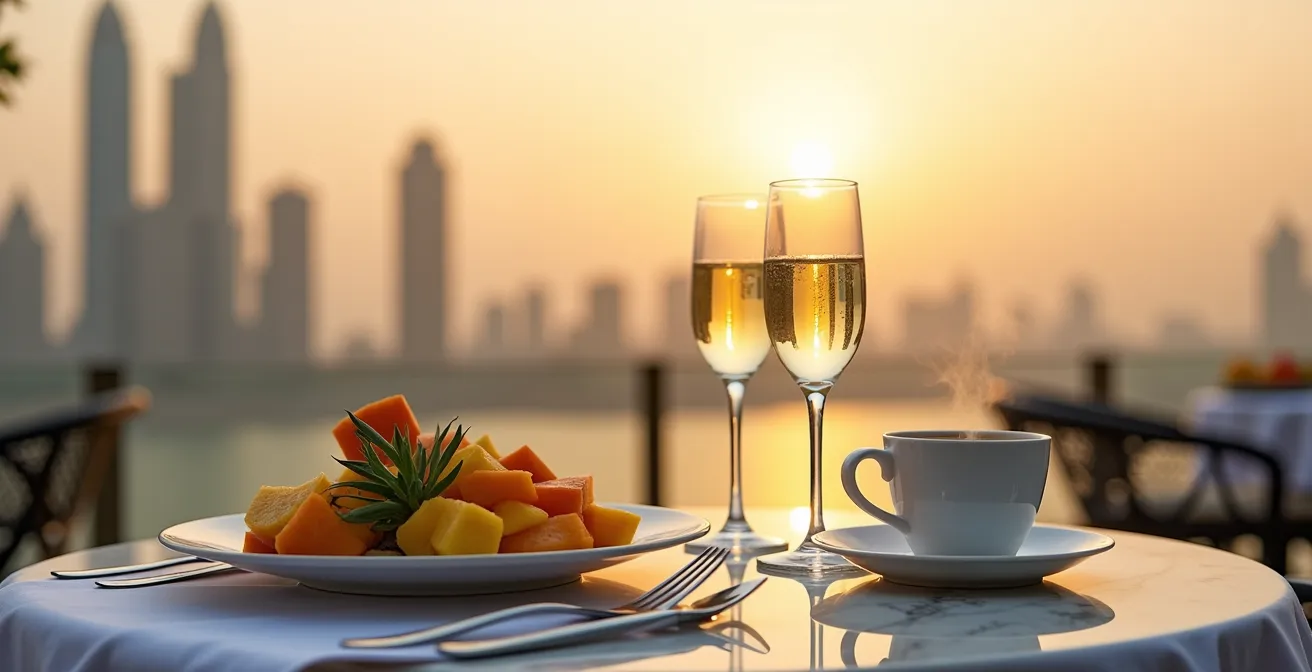
The credit card hold for a Jumeirah breakfast isn’t a penalty; it’s a key to understanding the high-stakes economics of Dubai’s dining scene.
- Restaurants operate on thin margins with high costs for premium ingredients and staff, where every empty table represents a significant, unrecoverable loss.
- No-shows are a critical financial threat, making a “commitment signal” from diners essential for business survival.
Recommendation: Instead of viewing it as a barrier, see the booking policy as the first rule in the game of mastering Dubai dining and use this guide to play it to your advantage.
You’ve found the perfect spot for breakfast in Jumeirah. The menu looks incredible, the view is stunning, but during the booking process, you’re stopped by an unexpected request: a credit card hold. It can feel jarring, even presumptuous. Is a simple breakfast reservation now treated like a hotel booking? The common assumption is that it’s just a way to deter no-shows or that it’s another symptom of Dubai’s penchant for luxury. While not untrue, these explanations barely scratch the surface of the intricate business model at play.
As a restaurant industry consultant, I can tell you this policy is not about punishing you. It’s about the financial survival of a complex operation built on what we call operational yield and perishable premium inventory. In a city with some of the world’s highest commercial rents and guest expectations, every single seat is a carefully managed asset. A no-show isn’t just an empty table; it’s a cascade of unrecoverable costs, from the hand-selected organic berries to the wages of the pastry chef who arrived at 4 AM.
But what if understanding this system could actually work to your advantage? This guide will decode the hidden business logic behind Dubai’s dining culture. We will move beyond the initial surprise of the credit card hold to explore the entire ecosystem it supports. From analyzing buffet costs and avoiding “pretty food” traps to securing a table at a Michelin-starred venue without a three-month wait, you will learn to see the rules not as obstacles, but as a playbook. By the end, you’ll be able to navigate the city’s vibrant culinary scene like a seasoned insider.
This article breaks down the essential strategies and insights you need to master the art of dining in Dubai. Explore the sections below to understand the economics, timing, and tactics that will transform your experience from a casual diner to a savvy connoisseur.
Summary: A Consultant’s Guide to Navigating Dubai’s Dining Rules
- Buffet vs A La Carte Breakfast: Which Is Better for a Light Eater?
- The ‘Pretty Food’ Trap: Is the Pistachio Croissant Actually Good?
- Where to Find a Gourmet Breakfast with a Play Area in Sight?
- The 11 AM Rush: Why You Should Arrive by 9 AM
- Gluten-Free Bakeries: Which Ones Avoid Cross-Contamination?
- How to Get a Table at Heston’s Dinner Without Booking a Month Ahead?
- Pre-Ordering Drinks: How to Avoid the 20-Minute Queue at Intermission?
- How to Secure a Table at Dubai’s Top Michelin Venues Without a 3-Month Wait?
Buffet vs A La Carte Breakfast: Which Is Better for a Light Eater?
The classic breakfast dilemma—sprawling buffet or focused à la carte—is more than a matter of appetite; it’s a clash of two distinct business models. For a restaurant, a buffet is a game of averages. They calculate the total food cost based on predicted consumption across all guests. This model thrives on volume and predictability, allowing for bulk purchasing of ingredients and streamlined kitchen prep. It’s an efficient way to manage perishable premium inventory for a large number of diners at once. However, for a light eater, this “all-you-can-eat” value is often an illusion. You are effectively subsidizing the larger appetites at the surrounding tables.
Conversely, the à la carte option represents a higher-touch, higher-cost service model for the venue. Each dish is made to order, requiring more specific labor and individualized attention from the kitchen. This ensures maximum freshness and quality—the “freshness premium”—but it also means the restaurant’s profit is tied to each specific dish sold. For a light eater with a specific craving, this is almost always the more economically sound choice. You pay only for what you desire, avoiding the hidden cost of the buffet’s untouched options.
The growing popularity of “hybrid” models, featuring a cold buffet plus one hot main course, is a direct response to this dilemma. It offers the restaurant a degree of cost control while giving diners like you a sense of variety without the commitment of a full buffet. Understanding these models allows you to make a decision based on true value, not just perceived abundance.
This table breaks down the typical breakfast models you’ll encounter in Dubai, helping you align your appetite with the right price point and experience. It’s a clear example of how restaurants structure their offerings to manage costs and cater to different diner profiles.
| Restaurant Model | Price Range (AED) | What’s Included | Best For |
|---|---|---|---|
| Full Buffet | 150-350 | Unlimited hot & cold items | Big appetites, variety seekers |
| Hybrid Model | 120-200 | Cold buffet + 1 hot main | Light eaters who want options |
| À La Carte | 80-150 | Individual dishes made fresh | Quality-focused, specific cravings |
| Continental Set | 95-140 | Fixed selection, no buffet | Predictable preferences |
Ultimately, choosing between a buffet and à la carte is a strategic decision. By calculating the cost of what you will genuinely enjoy, you can beat the “value trap” of the buffet and ensure your breakfast budget is spent on quality, not quantity.
The ‘Pretty Food’ Trap: Is the Pistachio Croissant Actually Good?
In the age of social media, many Dubai eateries have mastered the art of creating dishes that are designed to be photographed first and eaten second. This is the “pretty food” trap: visually spectacular creations, often involving viral ingredients like pistachio cream or gold leaf, that command a premium price. From a business perspective, these items are not just food; they are powerful marketing assets. The development cost includes not just ingredients but also a calculation of their potential for viral reach on platforms like TikTok and Instagram.
The consultant’s view is that you are often paying for the marketing value, not just the culinary one. When a pastry is engineered for its looks—perfectly swirled, artificially colored, and extravagantly garnished—it can sometimes come at the expense of fundamental quality, like the lamination of a croissant or the true flavor of the ingredients. The high price tag is justified by the restaurant as a return on their marketing investment, as a single viral post can drive hundreds of customers. For instance, with some viral items, like the $20 Fix Dessert chocolate bar, selling out instantly, the demand is driven by scarcity and online hype.
This photograph perfectly illustrates the contrast. On one side, you have authentic craftsmanship focused on texture and flavor; on the other, a creation designed for visual impact.
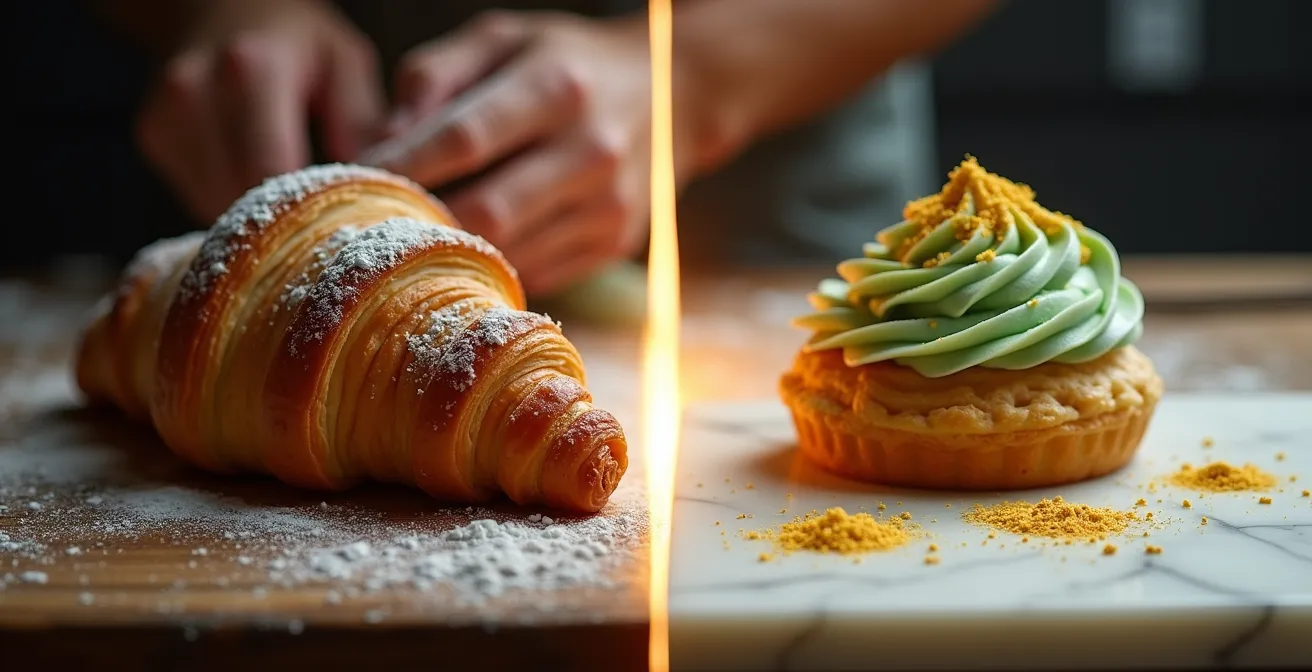
As you can see, the value proposition is different. One prioritizes the eating experience, while the other prioritizes the sharing experience. This doesn’t mean “pretty food” is always bad, but it requires you to be a more discerning customer. Judge the item on its own merits of taste and texture, not just its photogenic qualities.
Case Study: The Dubai Chocolate Phenomenon
Fix Dessert Chocolatier’s ‘Can’t Get Knafeh of It’ chocolate bar went viral on TikTok, selling out within minutes daily despite its premium price. This demonstrates how photogenic items can become powerful marketing tools, where the value of the online buzz far outweighs the cost of the ingredients, turning a simple confection into a must-have status symbol.
The next time you’re tempted by an over-the-top pastry, ask yourself a simple question: does this look like it was made by a baker or by a marketing department? The answer will often tell you whether it’s worth the price.
Where to Find a Gourmet Breakfast with a Play Area in Sight?
For parents, a leisurely breakfast at a gourmet restaurant can seem like a distant dream. The challenge of keeping children entertained often conflicts with the desire for a high-quality dining experience. A growing number of Dubai venues have identified this high-value pain point and have invested heavily in a specific business model: the gourmet family-friendly destination. These are not simply restaurants with a sad, neglected corner of plastic toys. They are sophisticated operations that merge a top-tier culinary offering with a dedicated, and often supervised, entertainment zone.
From a consultant’s perspective, this is a brilliant strategy to capture a lucrative market segment. By providing a safe and engaging environment for children, these restaurants remove the primary barrier for parents seeking a luxury experience. This allows them to justify premium pricing, as the customer is paying for a holistic solution: gourmet food for the adults, professional entertainment for the kids, and peace of mind for everyone. The investment in a high-quality play area, soundproofing, and trained staff becomes a key driver of operational yield, attracting families who will stay longer and spend more.
This approach elevates the establishment from a simple eatery to a weekend destination, as highlighted by one diner’s experience:
Winner of BEST Family Brunch in Dubai 2024, Into The Jungle at Palazzo Versace features roaming animals, Magic Phil performances, and a Jungle Princess, allowing parents to enjoy international cuisine while kids are thoroughly entertained.
However, not all “family-friendly” labels are created equal. To ensure you’re getting a truly gourmet experience and not just an overpriced meal next to a playground, you need to know what to look for. The quality of the kids’ activities and the menu are strong indicators of the venue’s overall commitment to excellence.
Your Checklist for Auditing a Gourmet Family Venue
- Check if the main restaurant has a dinner service with chef credentials.
- Look for fresh, seasonal ingredients on the kids’ menu, not just frozen items.
- Verify there are supervised activities that go beyond basic slides, such as cooking classes or craft corners.
- Ask about soundproofing or separation between the play area and the main dining space.
- Confirm if outdoor play areas have adequate shade and cooling systems for Dubai’s climate.
By choosing a venue that invests as much in its play area as its kitchen, you’re not just buying breakfast; you’re buying a seamless, stress-free family outing.
The 11 AM Rush: Why You Should Arrive by 9 AM
In the world of restaurant operations, timing is everything. The “11 AM rush” at popular Dubai breakfast and brunch spots is a predictable phenomenon that puts immense strain on the kitchen and service staff. This is the period of peak service density, where the volume of orders can lead to longer waits, a more frantic atmosphere, and a generally diminished experience. From a business standpoint, this is the most profitable but also the most challenging part of the day. Restaurants staff up and prep heavily for this window, and a credit card hold ensures these peak-time tables are filled.
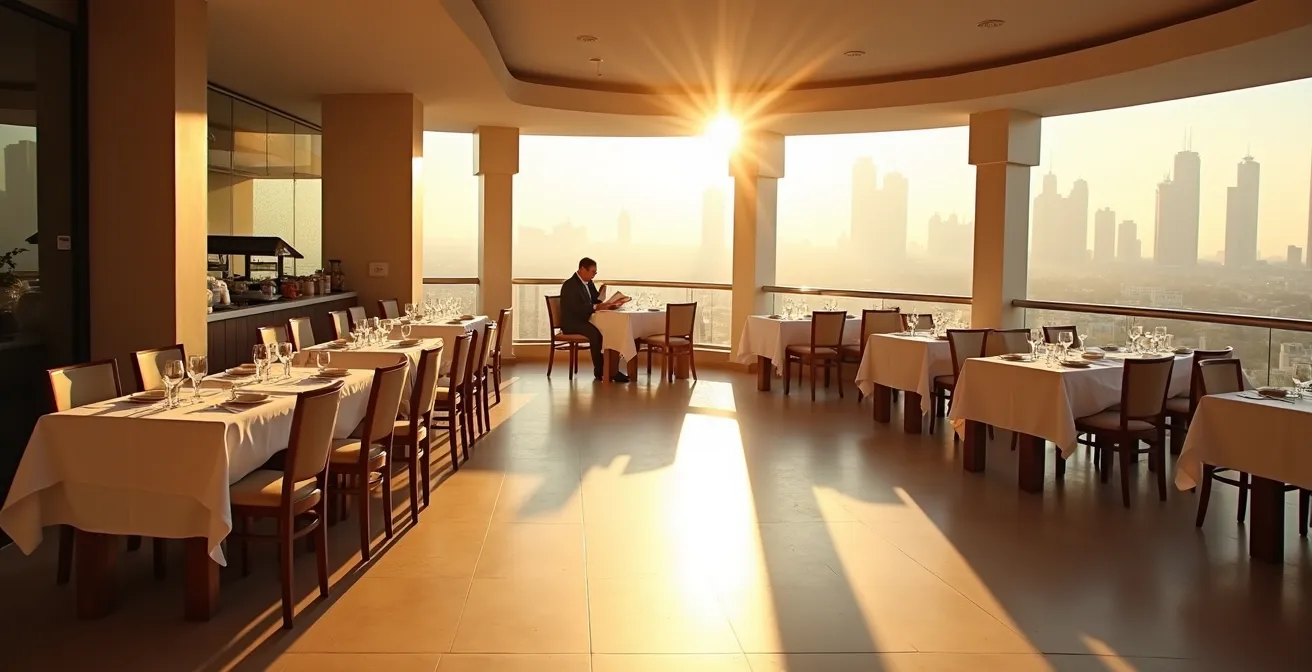
As a savvy diner, your best strategy is to swim against the tide. Arriving by 9 AM allows you to completely bypass the chaos. At this early hour, the restaurant is a different world: calm, quiet, and attentive. You get the first pick of the best tables, especially those on a terrace with a view, and the staff is fresh and focused entirely on you. The buffet items are pristine, and à la carte dishes come out of the kitchen without delay. You are essentially enjoying the full quality of the restaurant’s offering before the operational pressure mounts.
This photo captures the serene atmosphere that early arrivals get to experience—a stark contrast to the bustling crowds that will arrive just a couple of hours later.
The benefits extend beyond just atmosphere. Punctuality is critical, as venues with high demand manage their capacity tightly. As one popular spot illustrates, late arrivals for a reservation not only risk losing their table but also face practical issues like parking, which adds unnecessary stress. At The Farm in Al Barari, for instance, reservations are essential, and the limited free parking fills up extremely fast, forcing those who arrive during the rush to park far away.
Treat your 9 AM arrival not as an inconvenience, but as a strategic move to secure the best possible service, ambiance, and value for your money. You’re not just beating the crowd; you’re optimizing your own investment in the experience.
Gluten-Free Bakeries: Which Ones Avoid Cross-Contamination?
Navigating the dining scene with a serious dietary restriction like celiac disease is a significant challenge, especially in a city known for its bread and pastry culture. The terms “gluten-friendly” and “gluten-free” are often used interchangeably, but from an operational and safety standpoint, they are worlds apart. Offering a “gluten-friendly” item is relatively simple for a kitchen. Offering a truly celiac-safe product, however, is a major business commitment that carries significant cost and liability.
A truly gluten-free operation requires a complete overhaul of standard kitchen processes to prevent cross-contamination. This includes dedicated preparation areas, separate ovens, and distinct sets of utensils and cutting boards. Staff must undergo rigorous training on protocols, and the supply chain must be vetted to ensure ingredients like oats are certified gluten-free. This level of diligence is expensive and complex to maintain, which is why venues that properly cater to celiacs often have higher prices. You are paying for the safety protocol and the peace of mind it provides.
Many establishments take shortcuts, preparing gluten-free toast in the same toaster as regular bread, for example. For a savvy diner with celiac disease, the ability to distinguish between genuine commitment and marketing lip service is crucial. You must become an investigator, asking pointed questions to audit the restaurant’s processes before you dine.
Checklist: Celiac-Safe Investigation Questions for Dubai Venues
- Do you have a dedicated gluten-free preparation area and a separate oven?
- Are your staff members specifically trained on cross-contamination protocols for celiac disease?
- Are the oats you use in your dishes certified as gluten-free?
- Do you use separate fryers for preparing gluten-free items?
- Can you provide information or certification for your gluten-free flour suppliers?
Some pioneers in the Dubai market have built their entire brand around this commitment. For example, Bounty Beets is well-known for its extensive plant-based and gluten-free menu, making it a go-to for vegans and diners with celiac disease. They have invested in creating a menu with items like vegan pizzas, tacos, and sweet potato gnocchi that adhere to these strict standards, demonstrating that it is possible to be both gourmet and safe.
Ultimately, when your health is on the line, the responsibility falls on you to be a vigilant consumer. Don’t be afraid to have a detailed conversation with the manager or chef; a truly celiac-safe restaurant will welcome your questions and be proud to explain their protocols.
How to Get a Table at Heston’s Dinner Without Booking a Month Ahead?
Securing a reservation at a globally acclaimed restaurant like Dinner by Heston Blumenthal at Atlantis The Royal often feels like an impossible task, with tables booked out months in advance. This exclusivity is not accidental; it’s a carefully managed part of the brand’s mystique and a direct result of operating in a hyper-competitive market. In a city that, as of the latest guide, boasts what is a total of 19 Michelin-starred restaurants, high-profile venues use scarcity as a tool to maintain demand and justify their premium status.
However, from a consultant’s viewpoint, even the most impenetrable booking systems have built-in flexibilities designed to maximize operational yield. These restaurants cannot afford empty seats resulting from last-minute cancellations any more than a breakfast spot can. This creates opportunities for the strategic diner who knows where and when to look. The “fully booked” status often refers only to standard tables at peak times (8 PM on a Friday). By thinking like a restaurant manager, you can exploit the system’s weak points.
The most effective strategy is to target non-standard inventory. Many top-tier restaurants have bar seating that is either non-reservable (first-come, first-served) or has a separate, shorter waitlist. These seats often offer the full menu and a more dynamic experience, with a direct view of the bar or kitchen team at work. Another key tactic involves timing. Calling the restaurant at 10 AM on the day you wish to dine can be fruitful, as this is when many venues process same-day cancellations and release those tables back into the system.
Here are some insider tactics for securing that last-minute table:
- Leverage Concierge Power: If you’re staying at a hotel within the same group (e.g., any Atlantis property for Heston’s), the concierge has access to reserved tables and a direct line to the restaurant manager. This is their most powerful tool for delighting high-value guests.
- Be Flexible with Time: When you call, explicitly state that you are available for very early (5:30 PM) or very late (9:30 PM) seatings. These slots are the hardest for the restaurant to fill.
- Follow Social Media: Many restaurant teams now use Instagram Stories to announce last-minute table availability due to cancellations. Turn on notifications for your target venues.
Instead of being deterred by the “fully booked” sign, see it as a challenge. With the right strategy, flexibility, and a bit of persistence, even the most sought-after tables in Dubai are within reach.
Pre-Ordering Drinks: How to Avoid the 20-Minute Queue at Intermission?
While the title suggests a theater, this problem is universal in Dubai’s hospitality scene, especially during the city’s famous brunches. You’ve settled in, the food is arriving, but your drink order seems to have vanished into a service black hole. This 20-minute wait for a beverage during a busy period is a classic example of a service bottleneck. At a bustling brunch, where analysis shows that most Dubai Saturday brunches operate during the 1pm to 4pm peak window, servers become a scarce resource. They are stretched thin, covering multiple tables and making long trips to a crowded bar. Your order is not lost; it’s simply in a queue with everyone else’s.
As a consultant, I advise diners to manage their own “drink pipeline” proactively rather than passively waiting. The single most effective tactic is to order your next drink when your current one is delivered. This “order-ahead” strategy ensures your request enters the service queue long before you are actually ready for it, effectively eliminating the wait time. It’s a simple shift in behavior that completely bypasses the service bottleneck and ensures you’re never left with an empty glass.
For groups, the strategy can be escalated. Instead of ordering individual cocktails, which require significant prep time from the bartender, opting for bottle service of wine or spirits drastically reduces the service demand. The server’s job is reduced to a single trip, and the table can self-manage their drinks. This not only improves your experience but also frees up the server to attend to other tables more efficiently, improving the operational flow for the entire section.
To maximize your brunch experience, it’s helpful to understand the different strategies for managing drink service. This table compares the most common tactics used by seasoned Dubai brunch-goers.
| Strategy | Effectiveness | Best For |
|---|---|---|
| Order next drink when current arrives | High | All table service venues |
| Bottle service for groups | Very High | Groups of 4+ |
| Befriend your server early | Moderate | Regular venues |
| Request table near service station | High | Busy brunches |
By understanding the operational pressures of a busy service, you can work with the system, not against it. This simple shift in ordering strategy is the difference between a frustrating wait and a seamless, enjoyable brunch.
Key Takeaways
- Analyze the Model: Understand the business logic behind buffet (volume) vs. à la carte (quality) to choose the best value for your appetite.
- Question the Hype: Recognize that “Instagrammable” food is a marketing tool. Judge it on taste and craftsmanship, not just its looks.
- Time is Your Ally: Arrive at breakfast spots by 9 AM to bypass the 11 AM rush, securing a better table, faster service, and a calmer atmosphere.
- Exploit the System: Use non-standard inventory like bar seating and off-peak dining times to secure last-minute tables at high-demand restaurants.
How to Secure a Table at Dubai’s Top Michelin Venues Without a 3-Month Wait?
The initial challenge of securing a reservation is just the beginning of navigating Dubai’s elite dining scene. The same principles of operational yield and scarcity that govern breakfast bookings are amplified tenfold at the Michelin level. With a dynamic scene where 4 new restaurants earned their first Michelin stars in the latest guide alone, competition among venues is as fierce as it is for diners trying to get a table. This environment forces restaurants to manage their booking sheets with military precision. However, this precision also creates opportunities if you know how their system works.
The ultimate strategy for bypassing the waitlist is to target off-peak inventory. A restaurant’s primary goal is to avoid an empty table at any cost. A table at 8 PM on a Friday is a high-demand asset, but a table at 1 PM on a Tuesday is a perishable good they are desperate to sell. Booking for weekday lunches can increase your availability by as much as 80%. Many Michelin-starred venues also offer more affordable “business lunch” menus during these times, providing the same kitchen quality for a fraction of the dinner price.
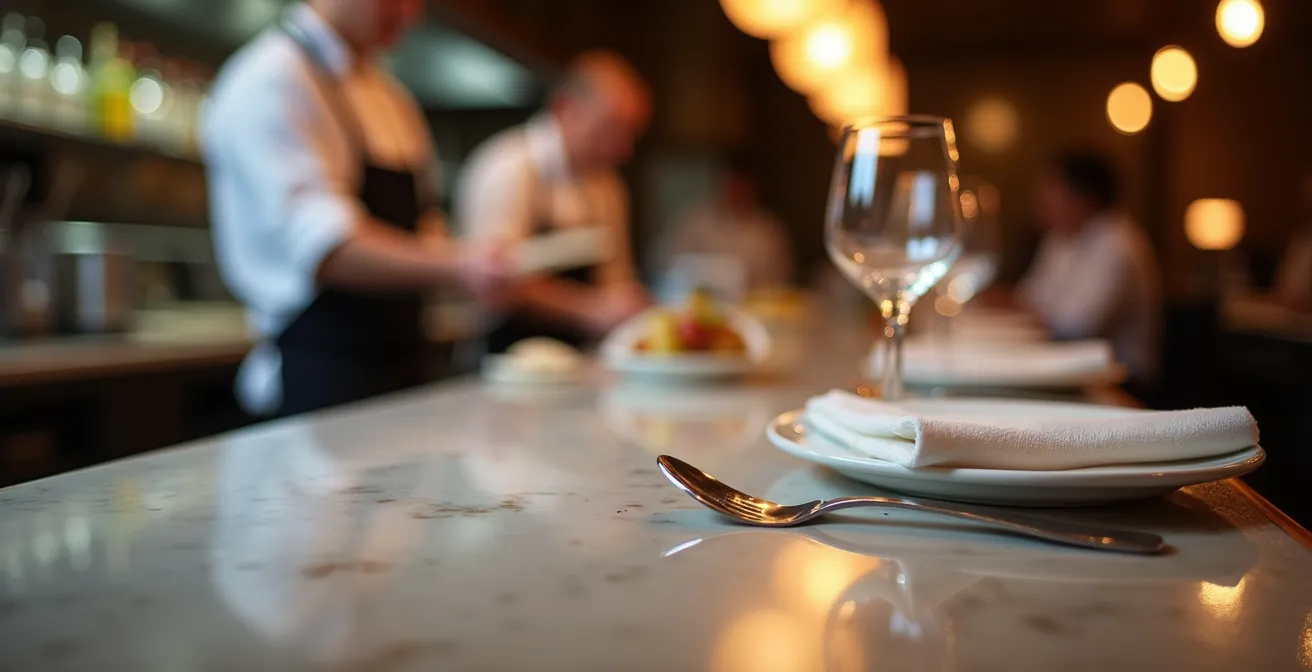
Another underutilized asset is solo bar seating. These single seats are the hardest for a restaurant to fill through standard reservations and are often held back for walk-ins or last-minute requests. For a solo diner or even a couple willing to sit side-by-side, requesting bar seating can be the golden ticket to an otherwise “fully booked” restaurant. It often provides a more engaging experience, with direct interaction with the chefs or bartenders.
This image captures the intimate and exclusive feel of bar seating at a high-end venue—an experience many diners overlook in their quest for a traditional table.
By combining these strategies—targeting off-peak hours and unconventional seating—you fundamentally change the supply-and-demand equation in your favor. You are no longer competing with the entire city for a handful of primetime slots; you are claiming the valuable inventory that others ignore.
Now that you understand the underlying business logic, from the breakfast credit card hold to the Michelin waitlist, you have the complete playbook. Apply these insider strategies to move beyond being a mere customer and become a true connoisseur of the Dubai dining scene.